MEMS Industry 4.0: Building Smart, Connected MEMS Fabs
MEMS devices sit inside cars, phones, medical tools, and industrial machines. As demand grows, fabs face pressure to deliver more devices with tighter quality and shorter lead times. MEMS Industry 4.0 is the answer: a connected, data-driven way of running a fab where equipment, software, and people work from the same real-time information.
What Is MEMS Industry 4.0?
MEMS Industry 4.0 applies smart manufacturing principles to MEMS production. Machines communicate automatically, data flows into central systems, and decisions are based on live information instead of manual reports. It builds on the broader idea of an Industry 4.0 smart factory, adapted to the specific needs of MEMS processes such as etching, bonding, and wafer-level packaging.
Why MEMS Fabs Need Industry 4.0
MEMS manufacturing is different from standard CMOS production. Fabs run many specialized processes, handle high product variety, and often manage lower volumes per product. This brings clear challenges:
- Mixed fleets of new and legacy equipment
- Manual recipe entry and paper-based records
- Limited visibility into tool status and process drift
- Strict traceability requirements from automotive and medical customers
Industry 4.0 tackles these problems by making every tool visible, controllable, and traceable. For a closer look at automation built for this sector, see eInnoSys MEMS manufacturing automation.
Key Building Blocks of a Smart MEMS Fab
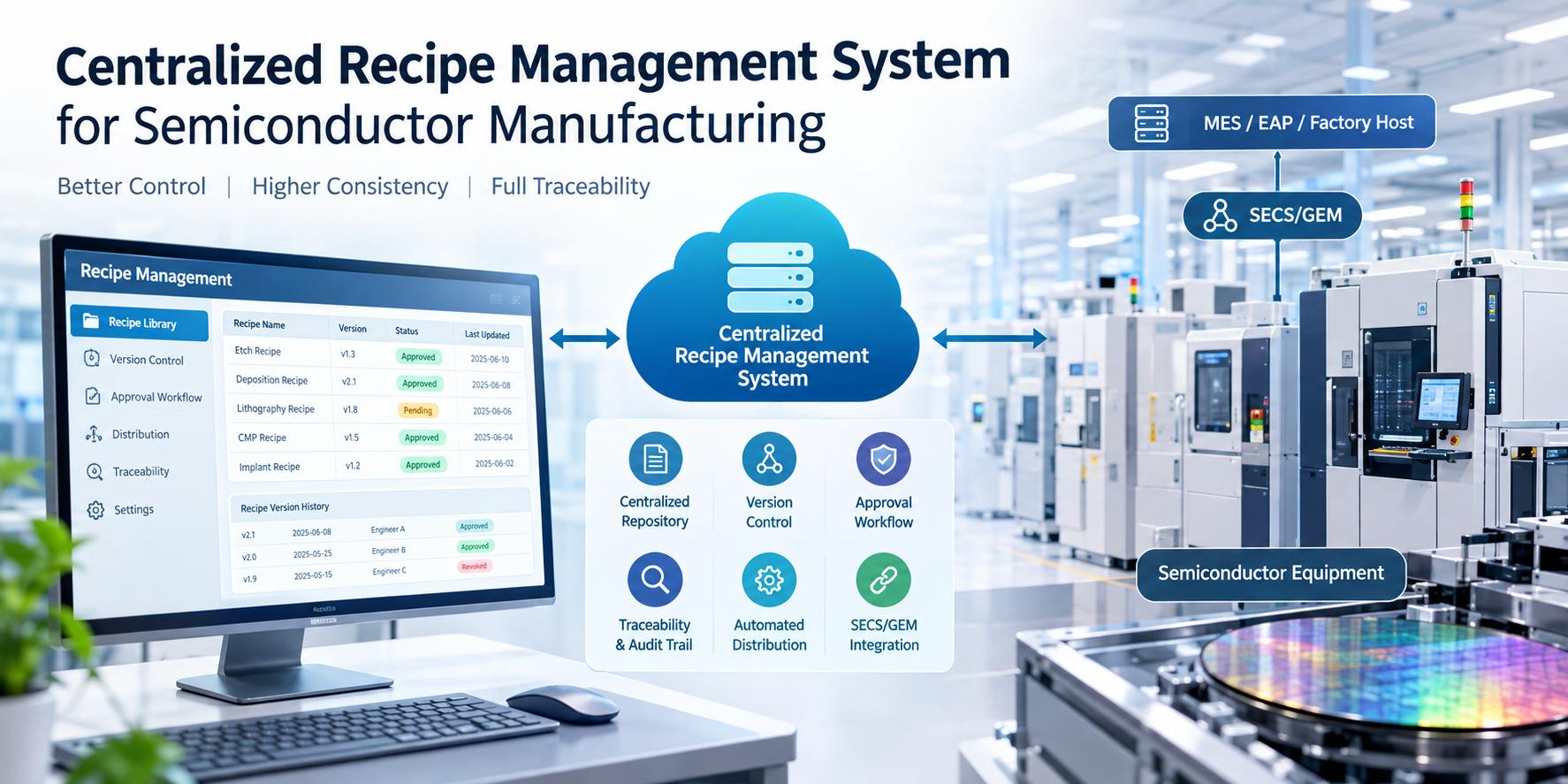
1. Standard equipment communication. SECS/GEM is the semiconductor industry standard for equipment-to-host communication. It lets a host system start processes, download recipes, collect data, and receive alarms. Fabs can add this capability through SECS/GEM equipment integration, which embeds compliant communication into the tool.
2. Legacy equipment connectivity. Most MEMS fabs cannot replace every machine, and they do not need to. A gateway solution for legacy MEMS equipment connectivity translates signals from older tools into standard messages, so these machines join the connected factory without major changes.
3. Operator interfaces. Automation still needs people. A clear interface for MEMS equipment control and HMI lets operators monitor status, respond to alarms, and follow host commands with confidence.
4. A common connectivity layer. When tools come from many vendors, a unified approach to semiconductor equipment connectivity keeps data consistent and reduces custom integration work.
5. Support for 300 mm and advanced automation. Fabs moving to larger wafers or fully automated material flow need carrier management and job control. GEM300 equipment automation provides these standards for advanced lines.
6. Built-in communication for new tools. Equipment builders and fabs adding new machines can use automated equipment communication options to reduce the effort of adding SECS/GEM support.
7. Safe testing before go-live. Connecting a live tool without testing is risky. SECS/GEM simulation and testing lets engineers validate host and equipment behavior in a safe environment before production begins.
From Connected Tools to Smart Decisions
Connectivity is only the first step. Once equipment data reaches the Manufacturing Execution System (MES), the fab gains real-time control. The MES can confirm that the right recipe is loaded, track lots automatically, and trigger holds when an alarm appears. Dashboards show which tools are running, idle, or down, so supervisors can act within minutes rather than hours.
Historical data adds another layer of value. Engineers can study yield trends, spot early signs of process drift, and plan preventive maintenance before a failure interrupts production. Over time, these insights support better capacity planning and more stable output.
Benefits of MEMS Industry 4.0
- Higher yield: Automated recipe download removes manual entry errors.
- Better uptime: Real-time alarms and status data shorten response time.
- Full traceability: Every wafer and lot carries a complete digital history.
- Lower cost: Less manual work means fewer errors and less scrap.
- Scalability: New tools can be added without rebuilding the data infrastructure.
- Faster cycle times: Automated tracking reduces waiting between steps.
How to Get Started
A full transformation does not need to happen overnight. A practical path looks like this:
- Audit your equipment and identify which tools already support SECS/GEM.
- Pick one or two high-impact tools for a pilot.
- Connect legacy tools through a gateway and test interfaces in simulation.
- Integrate with your MES and set up real-time monitoring.
- Measure results, then expand across the fab.
This step-by-step approach lowers risk, builds internal confidence, and shows measurable returns early.
Conclusion
MEMS Industry 4.0 gives fabs a clear route to higher yield, better equipment use, and complete production visibility. With the right mix of SECS/GEM connectivity, legacy tool integration, and MES communication, a MEMS fab can become smarter without replacing its entire tool set.
eInnoSys helps MEMS manufacturers and semiconductor fabs build this connected future with proven equipment automation solutions. Explore eInnoSys MEMS manufacturing automation and see how your fab can move toward Industry 4.0 today.