Why OSAT And ATM Facilities Are Upgrading To Manufacturing Recipe Management Software
Outsourced Semiconductor Assembly and Test (OSAT) providers and Assembly, Test, and Marking (ATM) facilities run on repeatable processes. Every die attach, wire bond, test program, and laser mark depends on a recipe: a set of parameters that tells a machine exactly how to process a product. When recipes are copied by hand, stored on local machines, or changed without a clear record, consistency and traceability suffer.
This is why many facilities are evaluating manufacturing recipe management software. It gives teams one controlled place to manage recipe versions, limit access, and reduce the risks of manual handling.
What Is Manufacturing Recipe Management Software?
Manufacturing recipe management software is a system that stores, organizes, controls, distributes, and tracks the recipes used by production equipment. In semiconductor recipe management, a recipe might include process parameters, test limits, marking patterns, or handler settings, depending on the machine.
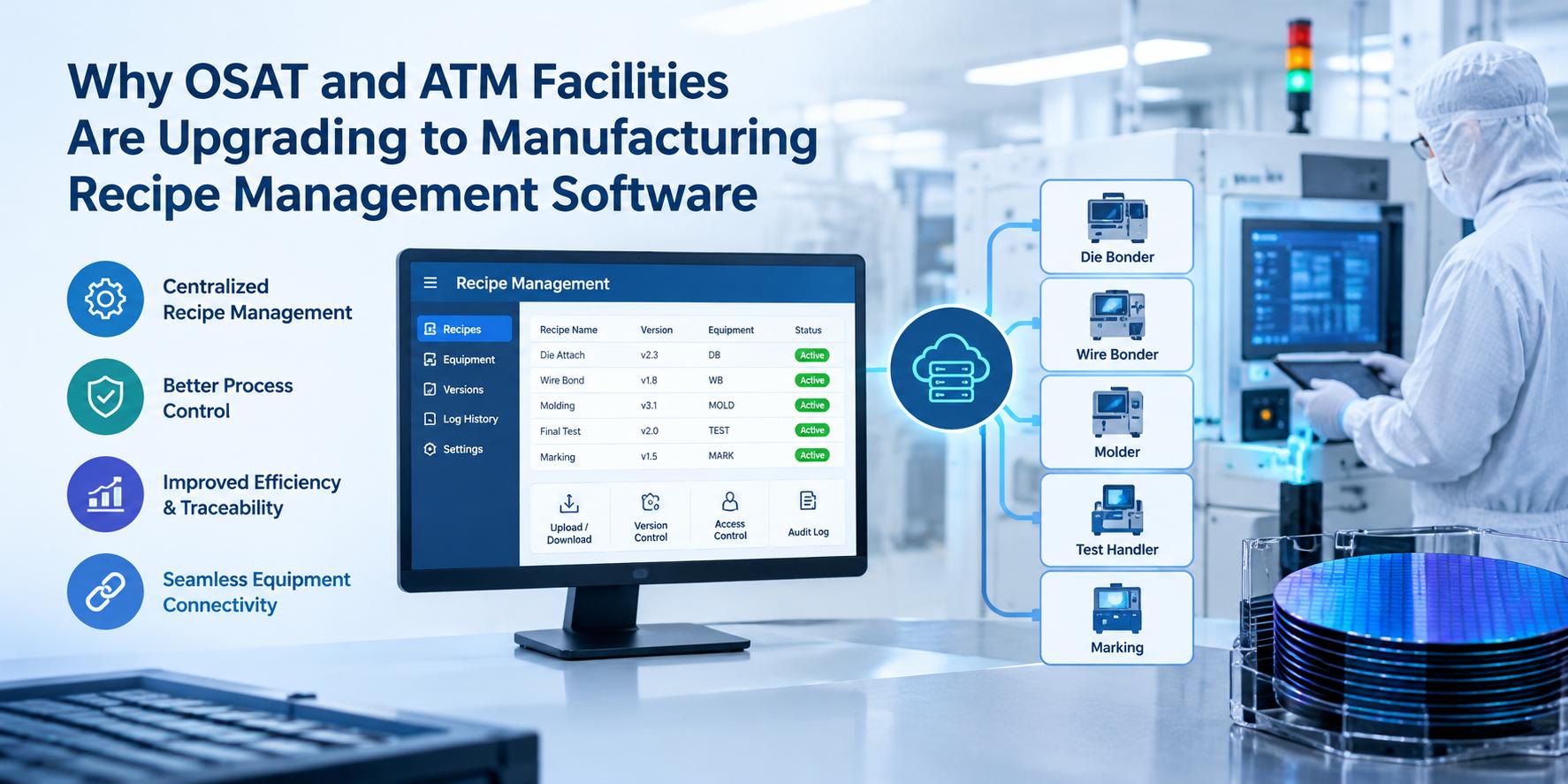
Instead of keeping recipes on individual tools, USB drives, or shared folders, a centralized recipe management system holds them in one managed repository. Engineers can see which version is approved, who changed it, and where it is used. Where the equipment supports it, recipes can be sent to or retrieved from machines through a connected interface.
Why OSAT and ATM Facilities Are Upgrading
- Manual Recipe Selection and Configuration Errors
Operators often choose recipes by name or retype parameters at the tool. A similar-looking name or a mistyped value can send a lot through the wrong process. The result may be rework, scrap, or a quality investigation.
- Different Recipe Versions Across Machines or Lines
When several bonders, testers, or markers run the same product, local copies tend to drift apart. One machine may carry an older revision after a parameter update. Output then varies between tools for reasons that are hard to trace.
- Limited Visibility into Recipe Changes and Usage
Without a central record, it is difficult to answer basic questions: Who edited this recipe? When? Which lots ran with it? Missing answers slow root-cause analysis and complicate audits.
- Time-Consuming Setup and Changeover
High-mix assembly and test environments change products often. Locating, copying, and verifying recipes by hand lengthens changeovers and ties up engineers who could be improving the process.
- Increasing Demands for Consistency and Traceability
Customers in automotive, industrial, and consumer markets expect documented, controlled processes. Facilities need to show not just what the process was, but that the approved version was used.
- Difficulty Connecting Legacy Equipment
Many OSAT and ATM lines mix newer tools with older machines that lack modern interfaces. Connecting them to factory automation systems takes planning, and recipe management is often held back until that connectivity exists.
Key Benefits of a Centralized Recipe Management System
A well-implemented system can support:
- Centralized storage and controlled access: Recipes sit in one repository, with permissions defining who can view, edit, or release them.
- Recipe version control and change tracking: Each revision is recorded with its author and date, so teams can compare versions or roll back.
- Reduced risk of incorrect or outdated recipes: Approved versions are easier to identify and distribute.
- Improved consistency across compatible equipment: Machines of the same type can be loaded from the same approved source.
- Faster retrieval and changeovers: Engineers spend less time searching for and copying files.
- Better traceability: Records of recipe usage support quality investigations and customer audits.
- MES and host integration where supported: Recipe data can connect with manufacturing execution systems (MES) and factory host software.
These are risk-reduction benefits. No software can guarantee that errors never occur, since results depend on equipment capabilities, configuration, and how well procedures are followed.
How SECS/GEM and Equipment Connectivity Support Recipe Management
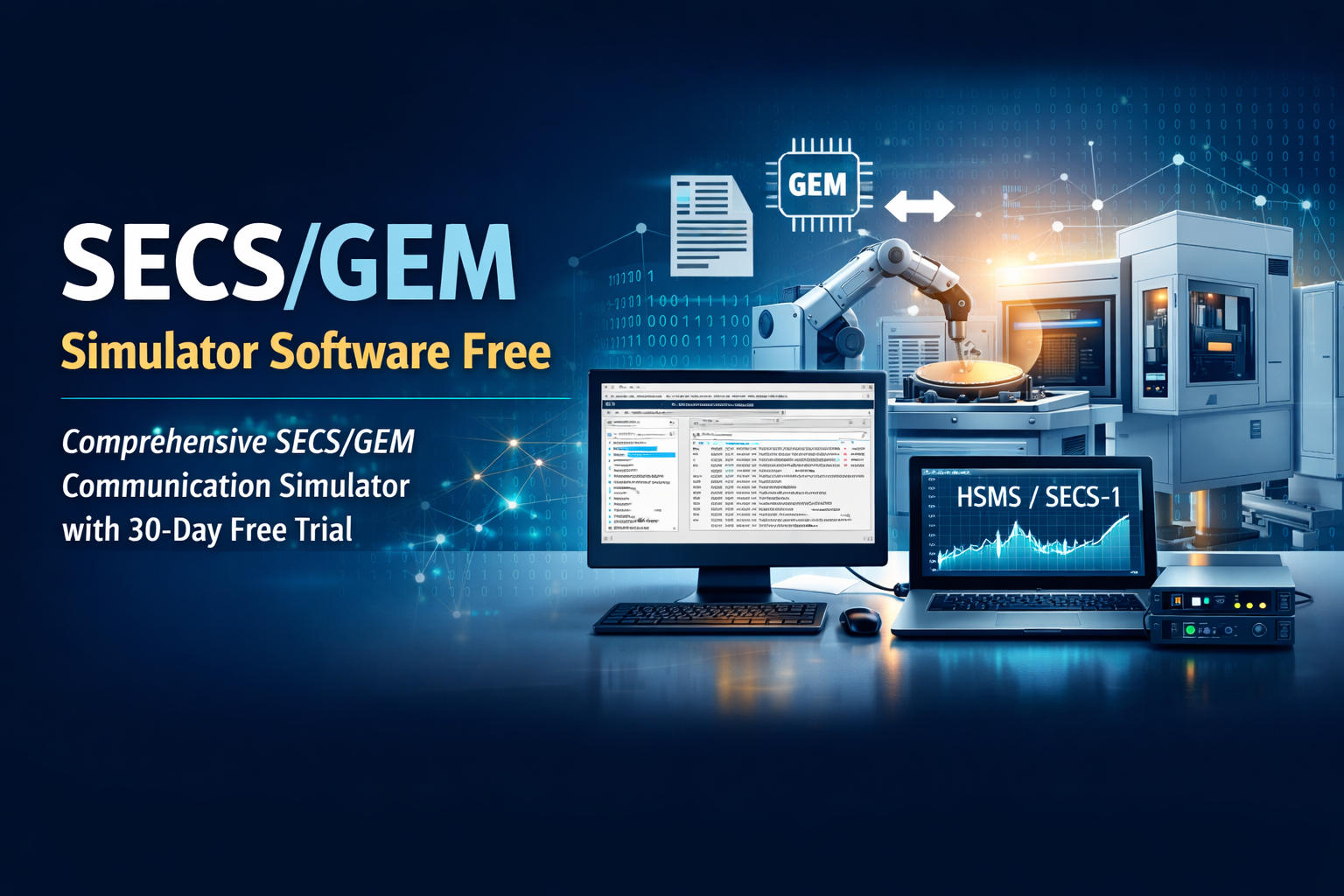
SECS/GEM is a set of semiconductor industry standards (SEMI E5, E30, and related) that lets compatible equipment communicate with a factory host system. Through it, a host can typically receive equipment status, collect events, and, where the machine supports it, handle recipe functions such as upload, download, selection, and verification.
What is actually possible depends on the equipment’s implemented capabilities, the software configuration, and the interface in use. SECS/GEM alone does not deliver complete centralized recipe management. It is best seen as a connectivity layer within a broader automation architecture, with a recipe management application, approval workflows, and MES integration built on top. Successful SECS/GEM integration is therefore a foundation, not the whole solution.
What OSAT and ATM Facilities Should Consider Before Implementation
Before selecting a solution, evaluate:
- Equipment compatibility: Which machines, vendors, and interface types are in your fleet?
- Legacy machine support: Can older tools be connected, and how?
- MES and host integration: How will recipe data flow to existing systems?
- Permissions and change history: Are roles, audit trails, and revision records detailed enough?
- Validation and approval workflows: Can recipes be reviewed and released before production use?
- Data security and audit needs: Does the system meet your internal and customer requirements?
- Scalability: Can it extend across lines, buildings, and sites?
Starting with a pilot line is a practical way to confirm these points before wider rollout.
How eInnoSys Supports Semiconductor Equipment Automation
Recipe control is only as strong as the connection between the software and the equipment. eInnoSys focuses on that layer, offering semiconductor equipment automation and SECS/GEM solutions that help facilities connect equipment to factory systems, including GEM300 environments and mixed fleets that include older tools.
With reliable equipment connectivity in place, facilities are better positioned to build a recipe management strategy around it: collecting equipment data, supporting recipe-related communication where machines allow, and linking to MES and other automation systems. Teams can discuss their specific equipment and requirements with eInnoSys to determine what is achievable for their lines.
Conclusion
Manufacturing recipe management software is becoming an important consideration for OSAT and ATM facilities that want tighter recipe control, stronger traceability, and greater process consistency. It does not eliminate every risk, but it replaces scattered files and manual steps with a controlled, auditable approach, and it prepares facilities for wider automation.
If you are planning that journey, start with your equipment connectivity. Explore eInnoSys solutions to see how SECS/GEM integration and factory automation can support your recipe management goals.