
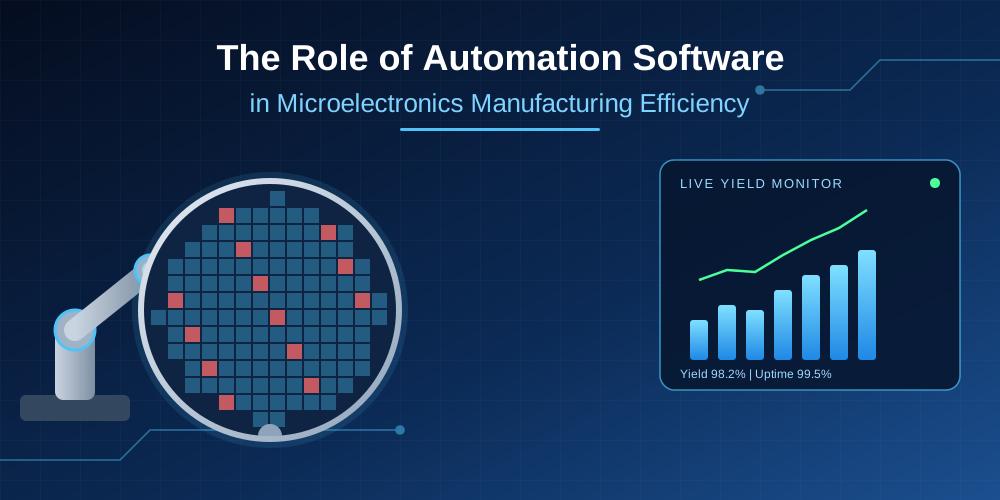
The Role Of Automation Software In Microelectronics Manufacturing Efficiency
Microelectronics manufacturing is among the most demanding industrial processes in the world. Features are measured in nanometers, a single speck of dust can ruin a wafer, and production lines run around the clock. In this environment, manual oversight simply cannot keep up. This is where automation software has become the backbone of modern fabrication facilities.
Why Automation Software Matters
A semiconductor or electronics plant involves hundreds of process steps, from photolithography and etching to deposition, testing, and packaging. Each step depends on precise parameters. Automation software coordinates machines, materials, and data across all of them, ensuring every stage runs consistently and in sync with the next.
Key Ways Automation Software Improves Efficiency
1. Higher Yield and Fewer Defects
Automated process control monitors temperature, pressure, and chemical concentrations in real time. When a reading drifts out of range, the system adjusts it immediately or flags it for review. This reduces scrap and improves the number of good chips produced per wafer.
2. Predictive Maintenance
Instead of waiting for equipment to fail, software analyzes sensor data to predict when a tool needs servicing. This prevents costly unplanned downtime and extends the life of expensive machinery.
3. Faster Throughput
Manufacturing Execution Systems (MES) schedule lots, route materials, and dispatch work automatically. Reduced idle time and smarter sequencing mean products move through the line faster.
4. Reduced Human Error
Manual data entry and adjustments introduce variability. Automation enforces standard recipes and recorded procedures, making results repeatable and traceable.
5. Real-Time Data and Analytics
Modern platforms gather massive volumes of data from every tool. Dashboards and analytics help engineers spot patterns, trace the root cause of defects, and make faster, better-informed decisions.
6. Traceability and Compliance
Every component can be tracked from raw material to finished product. This simplifies audits, supports quality standards, and makes recalls far more targeted.
The Growing Role of AI and Machine Learning
Today’s automation software increasingly uses AI to detect defects through image recognition, optimize process recipes, and forecast demand. These capabilities turn raw production data into continuous improvement, helping fabs reach performance levels that were once impossible.
Challenges to Consider
Adopting automation software is not without hurdles. Integration with legacy equipment, high upfront costs, cybersecurity concerns, and the need for skilled personnel all require careful planning. Manufacturers who start with clear goals, phased rollouts, and strong training programs see the best results.
Conclusion
As chips grow smaller and more complex, the margin for error continues to shrink. Automation software gives microelectronics manufacturers the precision, speed, and visibility they need to stay competitive. Companies that invest in it today will be better positioned to deliver higher quality products at lower cost and at greater scale.