
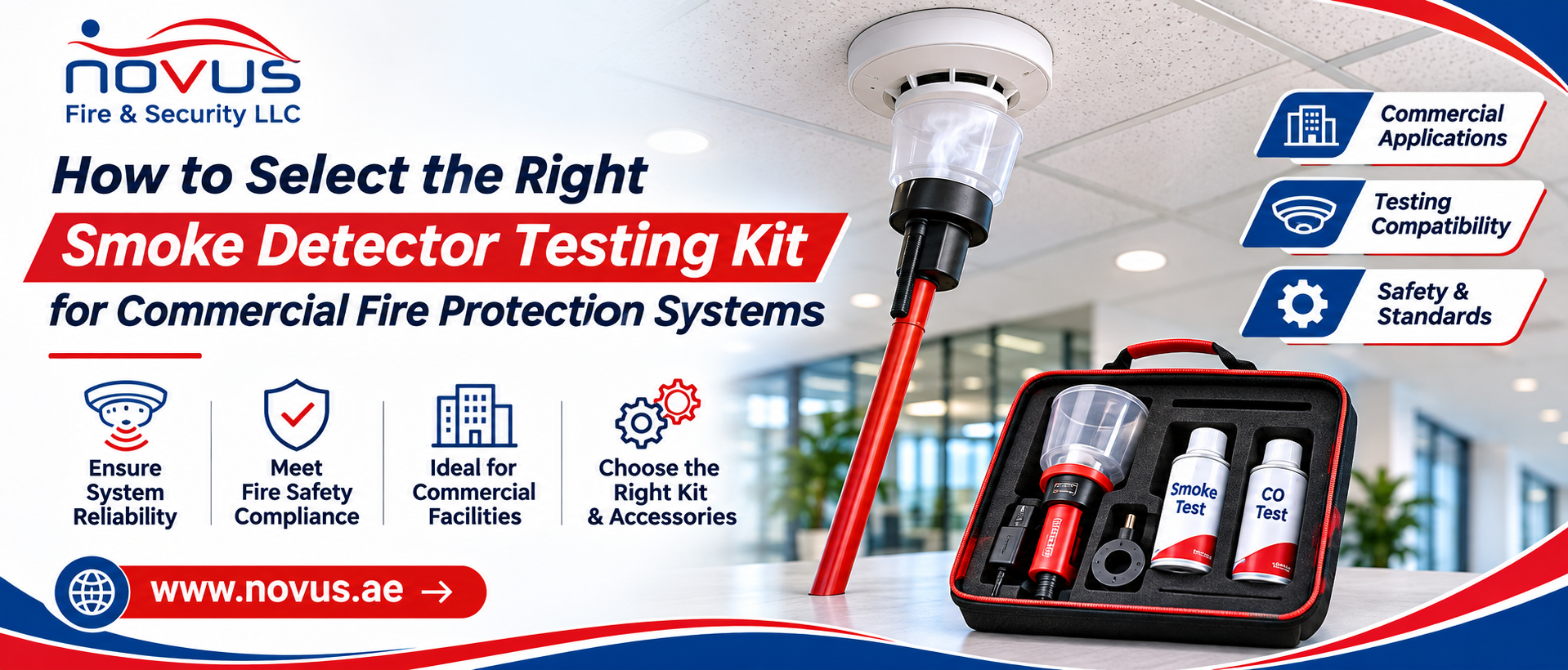
How To Select The Right Smoke Detector Testing Kit For Commercial Fire Protection Systems
Commercial buildings depend on properly maintained fire detection systems to provide early warning of potential fire incidents. Offices, hospitals, hotels, shopping centers, warehouses, factories, and other large facilities may contain hundreds of smoke detectors that require regular inspection and functional testing.
Choosing the right smoke detector testing kit is an important part of maintaining these systems. The equipment must be compatible with the installed detector models, suitable for the required testing method, and practical for technicians working across different areas of a building.
For facility managers, fire safety contractors, and maintenance teams in Saudi Arabia, selecting appropriate testing equipment also involves considering site requirements, technician training, product availability, and manufacturer instructions.
A suitable testing kit can help technicians carry out planned inspections more consistently, verify detector responses, and maintain accurate service records.
How Do You Select the Right Smoke Detector Testing Kit?
Choose a smoke detector testing kit based on the detector technology, manufacturer-approved testing method, building requirements, accessibility, and equipment compatibility.
Before purchasing, consider these important factors:
- Detector compatibility: Confirm that the testing equipment is suitable for the installed smoke detector models.
- Testing method: Select equipment designed for the required functional test procedure.
- Dispenser compatibility: Check whether the kit requires a specific smoke dispenser, aerosol, or accessory.
- Building requirements: Consider ceiling heights, detector quantities, and access conditions.
- Safety and documentation: Review product instructions and safety data sheets.
- Ease of operation: Choose equipment that trained technicians can use correctly and consistently.
- Supplier support: Check product availability, technical guidance, and replacement accessories.
The right kit is not necessarily the most expensive or feature-rich option. It is the equipment that meets the installed system's testing requirements and supports safe, consistent maintenance.
1. Identify the Types of Smoke Detectors Installed
The first step in selecting testing equipment is identifying the smoke detectors installed throughout the facility. Different detectors may use different sensing technologies and have different testing requirements.
Common types include:
Photoelectric smoke detectors: These detect smoke particles through changes in light within a sensing chamber. They are commonly used in commercial buildings and other occupied environments.
Ionisation smoke detectors: These use an ionisation chamber to detect changes caused by combustion particles. Their availability and use depend on the applicable product and regulatory requirements.
Multi-sensor detectors: These combine multiple sensing technologies, such as smoke and heat detection, to evaluate fire conditions.
Aspirating smoke detection systems: These draw air through a network of sampling pipes for analysis. Their testing and maintenance requirements differ from those of conventional point detectors.
Not every smoke detector can be tested using the same aerosol or method. Technicians should check the detector's model number, technical documentation, and manufacturer's approved procedure before choosing a tester.
Understanding the installed detector types helps prevent equipment incompatibility and supports more accurate maintenance planning.
2. Check Compatibility with the Smoke Detector Testing Kit
Compatibility is one of the most important purchasing considerations. A smoke detector tester should provide the correct test stimulus for the detector being inspected.
Some testing kits use synthetic smoke aerosol with a compatible dispenser, while others may use different approved testing arrangements.
Before selecting a smoke detector testing kit, check:
- Supported detector manufacturers and models.
- Approved smoke-test aerosol or test medium.
- Compatibility with the dispenser or test cup.
- Required accessories and consumables.
- Operating instructions and application requirements.
- Any limitations specified by the detector manufacturer.
For example, solo smoke testing equipment commonly uses dedicated dispensers and compatible smoke-test aerosols. A specific aerosol should not be assumed suitable for every detector or dispenser.
Technicians should also confirm whether the equipment supports the detector's physical size and installation arrangement. Correct compatibility helps ensure that the test stimulus reaches the sensing area as intended.
3. Choose Equipment Suitable for Commercial Building Requirements
Commercial properties often have different detector installation arrangements. A small office may have relatively accessible ceiling-mounted detectors, while a warehouse or industrial building may contain detectors installed at considerable heights.
The testing kit should suit the building's layout and maintenance requirements.
Important factors include:
Ceiling height: Consider whether an access pole or other approved access arrangement is required.
Detector accessibility: Check whether detectors are installed above equipment, shelving, suspended ceilings, or other obstacles.
Number of detectors: Larger buildings may require equipment that supports efficient testing across multiple inspection locations.
Building occupancy: Testing schedules should be coordinated with facility operations to minimise unnecessary disruption.
Working environment: Consider the temperature, dust, humidity, and other site conditions that may affect equipment handling and maintenance.
For high-ceiling applications, compatible extension poles and suitable access accessories can help technicians reach detectors without relying on unsafe improvised methods.
A suitable equipment selection should make routine testing practical while maintaining safe access procedures.
4. Evaluate Solo Smoke Detector Testing Equipment
Solo testing equipment is widely associated with professional smoke detector testing. Its product range includes smoke-test aerosols, dispensers, access poles, and related accessories designed to support functional testing of compatible detectors.
When evaluating Solo smoke detector tester Saudi Arabia options, consider the complete equipment arrangement rather than looking at the aerosol or dispenser in isolation.
Review the following:
- Whether the dispenser is suitable for the detector model.
- Which smoke-test aerosol is approved for use.
- Whether an extension pole is required.
- Whether the equipment is suitable for the installation height.
- Availability of replacement consumables.
- Current product documentation and regional availability.
A complete testing arrangement should allow technicians to apply the test stimulus according to the approved procedure and observe the expected detector response.
Product availability and model specifications can vary by market. Confirm current regional supply and compatibility before purchasing.
5. Consider Fire Alarm Testing Equipment and Maintenance Requirements
Smoke detector testing is one part of a wider fire alarm maintenance programme. Commercial fire protection systems may include manual call points, heat detectors, sounders, control panels, and other connected devices.
Maintenance teams should therefore consider whether their equipment requirements extend beyond smoke detector testing.
Fire alarm testing equipment Saudi Arabia's procurement may include:
- Smoke detector testers.
- Heat detector testing equipment.
- Multi-sensor detector testing tools.
- Manual call point testing accessories.
- Fire alarm system inspection equipment.
- Compatible access poles and replacement accessories.
Each testing tool has a specific purpose. A smoke detector tester should not be treated as a substitute for heat detector testing equipment or a complete fire alarm system inspection.
The selected equipment should support the facility's maintenance schedule and the testing procedures specified by the system manufacturers and applicable requirements.
6. Review Safety, Product Instructions, and Technician Training
Correct equipment selection is only the beginning. Technicians must understand how to use the kit safely and interpret the test results correctly.
Before testing, they should review the equipment instructions, relevant safety data sheets, and detector manufacturer's guidance.
A responsible testing procedure should include:
- Review the building's fire alarm documentation and inspection plan.
- Identify the detector model and confirm tester compatibility.
- Notify responsible personnel and follow site alarm-management procedures.
- Inspect the tester, dispenser, aerosol, and accessories.
- Position the testing equipment according to the approved method.
- Apply the test stimulus as instructed.
- Verify the detector response and relevant control panel indication.
- Record the result and report any faults.
- Restore the fire alarm system to its normal operating condition.
A successful functional test does not necessarily verify every aspect of detector sensitivity or the operation of the entire fire alarm system. Additional tests may be required under the relevant maintenance procedures.
Training is equally important. Technicians should understand equipment limitations, safe access practices, and the correct process for handling unsuccessful tests.
7. Compare Product Availability, Cost, and Supplier Support in Saudi Arabia
Price is an important factor when purchasing testing equipment, but the lowest initial cost may not represent the best long-term value.
When comparing fire alarm maintenance equipment in Saudi Arabia, consider the complete cost of ownership.
Evaluate:
- Initial equipment purchase price.
- Required dispensers and accessories.
- Replacement aerosols or consumables.
- Maintenance and servicing requirements.
- Product availability and delivery timelines.
- Technical support and product documentation.
- Compatibility with existing detector systems.
Ask suppliers for detailed product information before placing an order. Confirm that the proposed equipment is suitable for the detector models installed at your facility.
It is also useful to work with a supplier that understands professional fire alarm maintenance requirements and can help identify appropriate equipment for different applications.
For information about smoke detector testing products and professional fire safety testing solutions, Novus Fire and Security LLC can help maintenance teams explore suitable equipment options.
8. Create a Consistent Smoke Detector Testing Programme
A testing kit delivers the greatest value when it is part of a structured maintenance programme. Commercial facilities should maintain a detector inventory, inspection schedule, test records, and process for addressing faults.
A well-organised programme should include:
- A register of installed smoke detector models and locations.
- Manufacturer-approved testing procedures.
- Scheduled functional inspections.
- Records of successful and unsuccessful tests.
- Details of faults and corrective actions.
- Equipment inspection and consumable management.
- Confirmation that systems are restored after maintenance.
Testing frequency should be determined by applicable requirements, system documentation, manufacturer instructions, and the facility's maintenance programme. One universal testing interval should not be assumed for every building or detector type.
Consistent documentation helps facility managers track maintenance activities and identify recurring equipment or system problems.
Conclusion
Selecting the right smoke detector testing kit for commercial fire protection systems requires careful consideration of detector compatibility, testing methods, building layout, access requirements, safety, and supplier support.
Facility managers and fire safety contractors should identify their installed detector models before purchasing equipment. They should also review product instructions, confirm accessory compatibility, and ensure technicians receive appropriate training.
A suitable testing kit, combined with a structured inspection programme, can help maintenance teams carry out functional tests more consistently and maintain accurate records. Novus Fire and Security LLC is an option for professionals exploring smoke detector testing equipment and fire alarm maintenance solutions for commercial facilities.
FAQs
Q1. What is a smoke detector testing kit used for?
A1. A smoke detector testing kit provides the equipment needed to introduce an approved smoke-test stimulus to compatible detectors and verify their functional response.
Q2. How do I choose the right smoke detector tester in Saudi Arabia?
A2. Check detector compatibility, manufacturer-approved testing methods, dispenser requirements, accessories, product availability, safety documentation, and supplier support.
Q3. Is a Solo smoke detector tester suitable for commercial buildings?
A3. Solo testing equipment can be suitable for compatible smoke detectors in commercial buildings. The correct dispenser, aerosol, access accessories, and testing procedure must be confirmed for each detector model.
Q4. What equipment is required for commercial fire alarm maintenance?
A4. Depending on the installed system, maintenance may require smoke detector testers, heat detector testers, manual call point testing accessories, access poles, and other approved fire alarm testing tools.
Q5. How often should commercial smoke detectors be tested?
A5. Testing frequency depends on applicable requirements, detector manufacturer instructions, system documentation, and the facility's maintenance programme. Follow the approved inspection schedule.