Solar Manufacturing Equipment Integration: Bridging The Gap Between Machines And Smart Factories
The solar industry is scaling faster than ever, and manufacturers are under pressure to produce more cells and modules at lower cost without compromising quality. Yet many production lines still run on a patchwork of machines from different vendors, each speaking its own language. Solar manufacturing equipment integration closes this gap by connecting every tool on the floor into one coordinated, data-driven system.
A typical photovoltaic line includes wafer inspection systems, texturing and diffusion units, PECVD and PVD coaters, screen printers, laser tools, stringers, laminators, and final testers. Each machine generates valuable data, but when that data stays locked inside individual tools, operators cannot see the full picture. Integration makes machines communicate with each other and with higher-level systems such as MES, ERP, and quality platforms, so decisions are based on real-time facts rather than manual reports.
The benefits are significant. First, integrated equipment enables end-to-end traceability. Every wafer, cell, and module can be tracked through each process step, which makes root-cause analysis faster and helps manufacturers meet customer and compliance requirements. Second, real-time data exchange supports recipe management and process control, reducing variation and improving yield. Third, automated data collection removes manual entry errors and frees engineers to focus on optimization instead of paperwork. Finally, predictive maintenance becomes possible, because equipment health data can reveal wear and drift before they cause unplanned downtime.
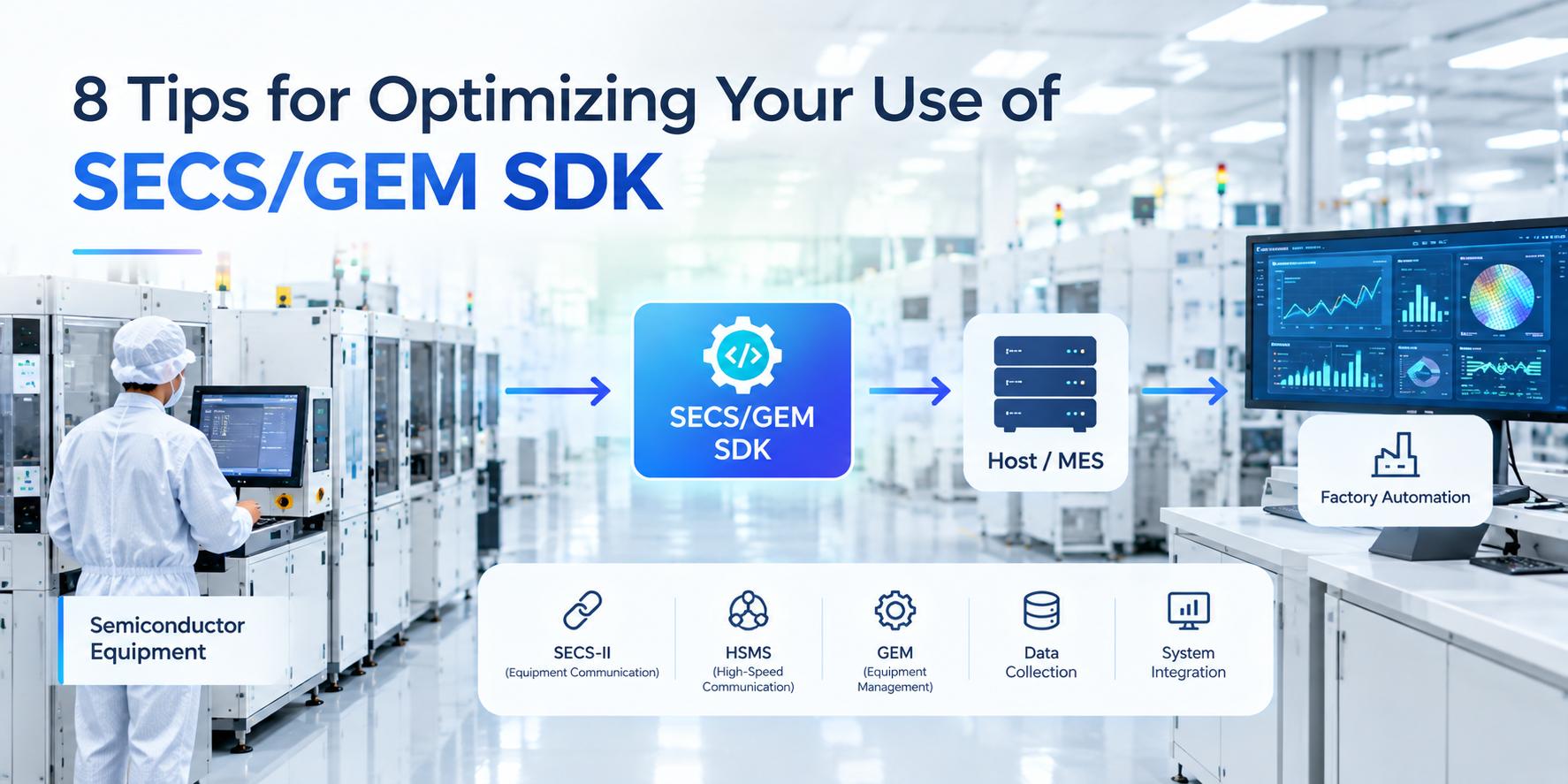
Despite these advantages, integration is not simple. Solar equipment often relies on varied protocols such as SECS/GEM, OPC UA, Modbus, or proprietary interfaces. Legacy machines may lack modern connectivity altogether, and custom coding for each tool is slow, costly, and hard to maintain. This is why a standardized, scalable integration approach matters. Solutions like einnosys EIGEMBOX help manufacturers bring both new and older equipment onto a common communication layer, making it far easier to enable SECS/GEM connectivity and feed reliable data into smart factory systems without rebuilding each machine from scratch.
A successful integration project usually starts with mapping the production flow and identifying which data points matter most, such as process parameters, alarms, throughput, and quality results. Next comes selecting the right connectivity layer, validating communication with each tool, and linking the data to MES and analytics platforms. Starting with a pilot on critical equipment, then expanding across the line, reduces risk and delivers early wins.
For companies working in the PV space, deep domain knowledge makes a real difference, because solar processes have unique requirements around cycle times, material handling, and data volume.
Looking ahead, smart factories will rely even more on connected equipment, AI-driven analytics, and automated decision-making. Manufacturers that invest in integration today build the foundation for tomorrow’s gains in efficiency, quality, and competitiveness. In a market where every percentage point of yield and every minute of uptime counts, bridging the gap between machines and smart factories is no longer optional. It is the key to sustainable, scalable solar manufacturing.