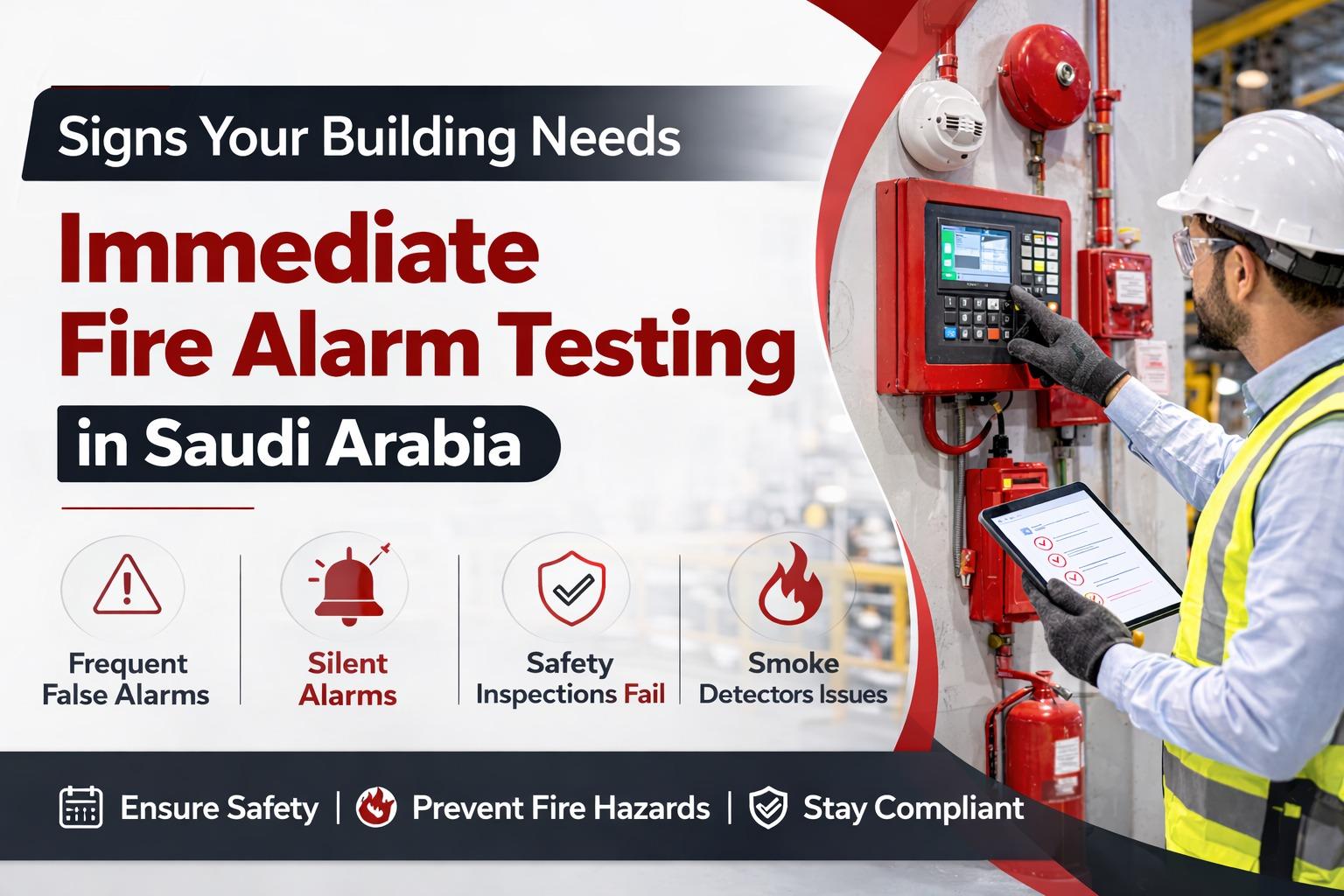
Signs Your Building Needs Immediate Fire Alarm Testing In Saudi Arabia
Fire safety systems are essential for protecting people, property, and business operations. In commercial buildings, offices, factories, hospitals, and residential complexes, a properly functioning fire detection system can mean the difference between early evacuation and a catastrophic disaster. This is why fire alarm testing is a critical safety practice for buildings across the Kingdom.
Regular fire alarm testing in Saudi Arabia ensures that smoke detectors, alarm panels, manual call points, and sounders operate correctly during emergencies. However, many building owners only schedule inspections when they notice visible problems with their systems. Ignoring warning signs can result in delayed fire detection, equipment damage, or serious safety risks.
Understanding the early signs that your building requires fire alarm system testing KSA can help prevent system failure and ensure compliance with Saudi Civil Defense regulations. This guide explains the most common indicators that your building needs immediate fire alarm testing in KSA and how timely inspections help maintain a safe environment.
Why Fire Alarm Testing Is Essential for Buildings in Saudi Arabia
Every building in Saudi Arabia must follow strict fire safety regulations established by the Saudi Civil Defense Authority. These regulations require building owners and facility managers to perform regular inspections and maintenance of fire alarm systems. Routine fire alarm system testing Saudi Arabia ensures that detection devices can quickly identify smoke or fire and alert occupants in time to evacuate safely. Without proper testing, faults within the system may remain undetected until a real emergency occurs.
Regular smoke alarm testing Saudi Arabia also helps identify issues such as faulty detectors, damaged wiring, and depleted batteries. In large commercial buildings, these issues can compromise the entire fire detection system. Maintaining a regular fire alarm testing in KSA schedule protects occupants, ensures compliance with regulations, and reduces the risk of property damage caused by fires.
1. Frequent False Fire Alarms
One of the most common signs that your system requires fire alarm testing is repeated false alarms. While occasional false alarms may occur due to dust or environmental conditions, frequent incidents often indicate deeper problems within the system.
Possible causes include:
Dirty smoke detectors
Faulty sensors
Incorrect detector sensitivity settings
Electrical faults in alarm circuits
Professional smoke alarm testing KSA helps identify the exact cause of repeated false alarms. Technicians perform smoke alarm test smoke procedures to verify whether detectors respond correctly to smoke simulations. Addressing these issues quickly prevents unnecessary evacuations and ensures that alarms activate only during real fire emergencies.
2. No Recent Fire Alarm Inspection
Another clear warning sign is when your building has not undergone fire alarm system testing KSA for an extended period. Fire alarm systems should be inspected regularly according to safety regulations and maintenance schedules. If a building has not been tested in months or years, several problems may occur:
Detector sensitivity may decrease
Alarm sounders may fail
Backup batteries may weaken
System wiring may degrade
Routine fire alarm testing in Saudi Arabia ensures that all system components function properly and remain compliant with safety standards. Building owners should maintain documented inspection records as proof of compliance during regulatory audits.
3. Smoke Detectors Are Dirty or Damaged
Smoke detectors are critical components of fire detection systems. However, they are also vulnerable to dust accumulation, humidity, and environmental contaminants. Dirty detectors may become less sensitive to smoke or trigger false alarms. Damaged sensors may fail completely during emergencies. Routine smoke alarm testing Saudi Arabia ensures that smoke detectors respond correctly when exposed to simulated smoke conditions.
During smoke alarm test smoke inspections, technicians verify that sensors activate the fire alarm control panel properly. Regular cleaning and testing improve detection accuracy and extend the lifespan of smoke detectors.
4. Control Panel Warning Lights or Error Messages
The fire alarm control panel monitors every component of the alarm system. If the panel displays warning lights, error codes, or trouble signals, the system requires immediate attention.
Common panel warnings include:
Communication failures between devices
Circuit faults
Power supply problems
Battery backup issues
These signals indicate that the system may not operate properly during an emergency. Immediate fire alarm system testing Saudi Arabia is necessary to identify and repair the underlying problem. Ignoring control panel warnings can result in partial or complete system failure during a fire incident.
5. Alarm Sounders Are Not Audible
Fire alarms must be loud enough to alert occupants in every area of the building. In large facilities such as shopping malls, office towers, and factories, insufficient alarm sound levels can delay evacuation. If occupants cannot clearly hear alarm signals, the system requires fire alarm testing in KSA to verify sounder performance.
During inspections, technicians test:
Alarm sound levels in different building zones
Speaker functionality
Signal transmission from the control panel
Proper fire alarm system testing KSA ensures that alarms are clearly audible and capable of alerting all occupants during emergencies.
6. System Components Are Outdated
Fire alarm technology evolves constantly. Older systems may not meet current safety regulations or may lack advanced detection capabilities.
Buildings with outdated systems may experience:
Reduced detection accuracy
Slower alarm activation
Difficulty integrating with modern fire suppression systems
Regular fire alarm testing in Saudi Arabia helps determine whether older systems remain reliable or require upgrades. Professional fire safety specialists, including Novus Fire and Security LLC, often recommend system modernization to improve reliability and compliance with modern fire safety standards.
7. Renovations or Structural Changes in the Building
Building renovations can affect the performance of fire alarm systems. New walls, ceilings, or electrical installations may block smoke detectors or interfere with alarm circuits. After construction or renovation projects, immediate fire alarm system testing KSA is necessary to ensure that detectors and alarms function correctly.
Technicians verify that:
Smoke detectors remain properly positioned
Alarm wiring is intact
Fire detection coverage remains effective
Routine smoke alarm testing KSA ensures that structural changes do not compromise fire safety systems.
8. Complaints From Building Occupants
Occupants often notice system issues before facility managers do. Complaints about frequent alarms, quiet alarm signals, or malfunctioning detectors may indicate the need for immediate inspection. If occupants report problems, building management should schedule fire alarm testing in KSA immediately.
Professional testing ensures that all components operate properly and eliminates potential safety risks. Companies like Novus Fire and Security LLC provide comprehensive inspection and testing services to help building owners maintain reliable fire detection systems.
Best Practices for Fire Alarm System Maintenance
Building owners should follow several best practices to ensure consistent fire alarm system performance.
1. Schedule Routine Inspections
Conduct regular fire alarm testing in Saudi Arabia to identify system faults early.
2. Maintain Inspection Records
Document all testing activities for regulatory compliance.
3. Train Building Staff
Staff should understand alarm signals and evacuation procedures.
4. Clean Detection Devices Regularly
Cleaning improves smoke detector performance and reduces false alarms.
5. Work With Qualified Fire Safety Professionals
Certified technicians ensure accurate fire alarm system testing Saudi Arabia and regulatory compliance.
Conclusion
Fire alarm systems play a critical role in protecting buildings, employees, and visitors. However, these systems require regular inspection and maintenance to remain reliable. Warning signs such as frequent false alarms, damaged smoke detectors, control panel errors, and outdated equipment indicate the need for immediate fire alarm testing in Saudi Arabia.
By conducting routine fire alarm system testing KSA and proper smoke alarm testing Saudi Arabia, building owners can detect system faults early and maintain full compliance with fire safety regulations. Timely inspections help ensure that fire alarm systems function correctly when they are needed most, protecting lives and property from potential fire hazards.