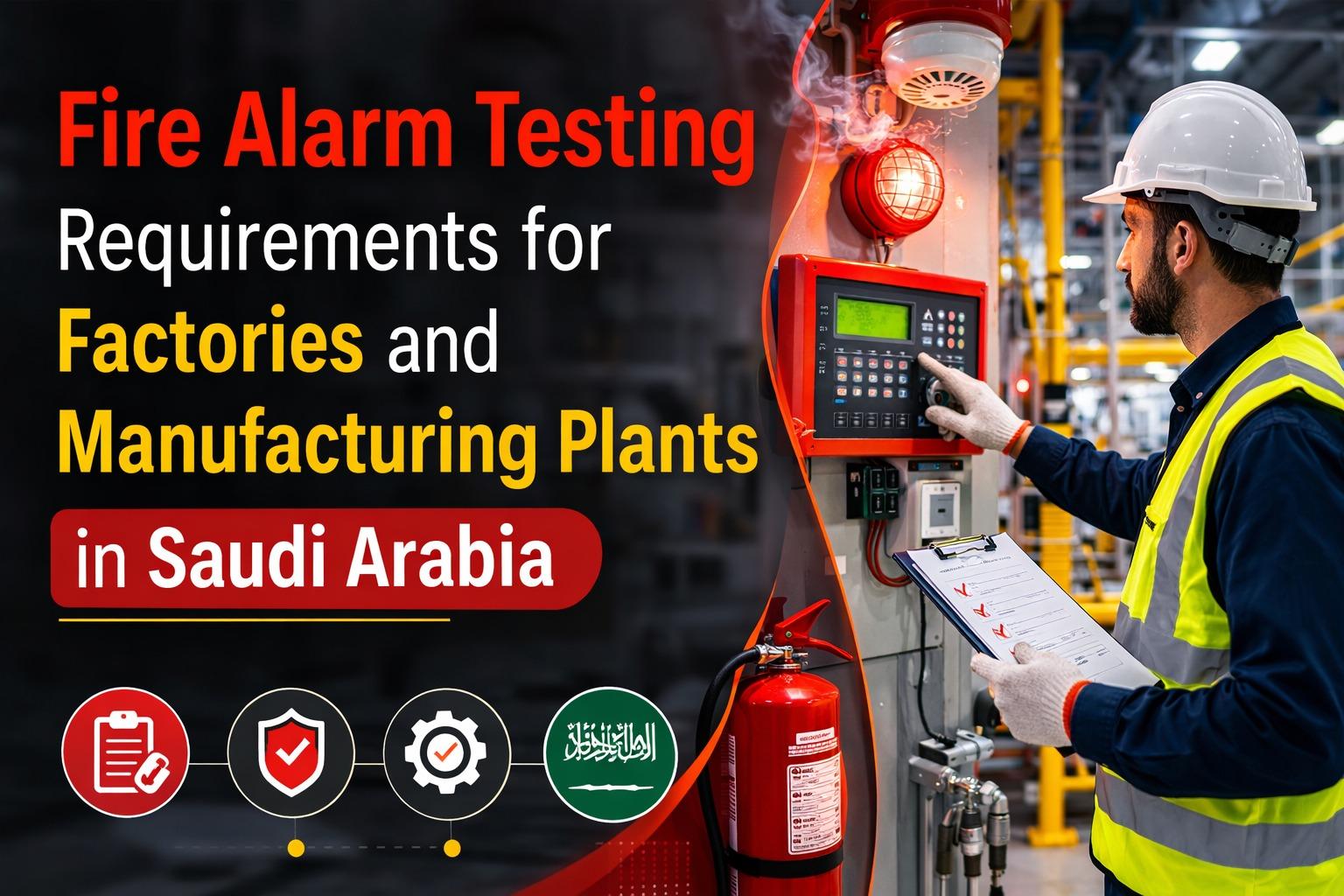
Fire Alarm Testing Requirements For Factories And Manufacturing Plants In Saudi Arabia
Industrial facilities such as factories and manufacturing plants operate with heavy machinery, electrical systems, flammable materials, and large workforces. Because of these risk factors, fire alarm testing plays a critical role in protecting people, equipment, and property. In Saudi Arabia, fire safety regulations require industrial buildings to maintain fully operational fire detection and alarm systems.
Regular fire alarm system testing in Saudi Arabia ensures that alarms, smoke detectors, and control panels function correctly during emergencies. Without proper testing, faults in sensors or alarm circuits may go unnoticed until a real fire occurs. This is why compliance with national fire safety regulations and international standards is essential for factories and manufacturing facilities.
This guide explains the fire alarm testing requirements for factories and manufacturing plants in Saudi Arabia, including regulatory guidelines, testing procedures, compliance schedules, and best practices for maintaining reliable fire protection systems.
Importance of Fire Alarm Testing in Industrial Facilities
Factories and manufacturing plants are high-risk environments due to combustible materials, electrical equipment, and large production areas. Regular fire alarm testing in KSA helps detect system faults early and ensures the safety system performs correctly when needed.
The key reasons why industrial facilities must prioritize fire alarm testing include:
1. Worker Safety
Employees working in production environments depend on early fire detection systems. Proper smoke alarm testing KSA ensures alarms activate quickly to alert workers and allow safe evacuation.
2. Protection of Industrial Assets
Manufacturing plants contain expensive machinery and inventory. Regular fire alarm system testing Saudi Arabia helps prevent catastrophic losses caused by delayed fire detection.
3. Compliance with Civil Defense Regulations
Saudi Civil Defense requires facilities to maintain functional fire safety systems. Regular testing ensures compliance with regulatory inspections and safety certifications.
4. Business Continuity
A fire incident can stop production for weeks or months. Preventive testing minimizes risk and protects operational continuity.
Fire Safety Regulations in Saudi Arabia
Fire safety systems in industrial facilities are regulated by the Saudi Civil Defense Authority. These regulations are designed to ensure that fire detection and alarm systems function properly in all commercial and industrial buildings.
Factories and manufacturing plants must comply with several safety standards, including:
Installation of approved fire alarm systems
Periodic fire alarm testing in Saudi Arabia
Routine maintenance of smoke detectors and alarm panels
Documentation of inspection and testing activities
Immediate repair of system faults
Industrial buildings must also comply with international fire protection standards such as NFPA (National Fire Protection Association) guidelines, which provide detailed procedures for alarm system inspection and testing.
Types of Fire Alarm Systems Used in Factories
Manufacturing facilities use different types of fire alarm systems depending on the size and complexity of the building.
Conventional Fire Alarm Systems
These systems divide buildings into zones. When a fire occurs, the control panel identifies the zone where the alarm was triggered.
Addressable Fire Alarm Systems
Each device has a unique address, allowing precise identification of the triggered detector. This system is commonly used in large factories.
Wireless Fire Alarm Systems
Wireless systems are suitable for facilities where wiring installation is difficult or expensive. Regardless of the type, fire alarm system testing KSA is essential to verify that sensors, control panels, and alarm devices are functioning correctly.
Fire Alarm Testing Requirements for Factories
Industrial buildings must conduct periodic testing to ensure fire detection systems remain operational. Testing procedures usually include multiple components.
1. Smoke Detector Testing
Smoke detectors are critical components of fire detection systems. Smoke alarm testing Saudi Arabia involves activating detectors using approved smoke testing equipment to confirm they trigger the alarm panel correctly.
Testing should confirm:
Smoke detection response time
Proper signal transmission to the control panel
Activation of audible alarms and warning signals
2. Manual Call Point Testing
Manual call points allow employees to trigger alarms during emergencies. These devices must be tested regularly to ensure they activate the system when pressed.
3. Alarm Sounder Testing
Factories are large spaces, and alarms must be loud enough to alert all workers. Testing ensures alarm sounders are functioning and audible throughout the facility.
4. Control Panel Inspection
The fire alarm control panel monitors the entire system. Regular inspections verify that all circuits, batteries, and connections operate properly.
5. Battery and Backup Power Testing
Backup power systems ensure alarms continue working during power failures. Testing confirms batteries are charged and capable of supporting system operation.
Recommended Fire Alarm Testing Schedule
Industrial facilities should follow a structured testing schedule to maintain safety and compliance.
Weekly Testing
Visual inspection of alarm panels
Check system indicators and error messages
Monthly Testing
Test manual call points
Inspect alarm sounders and strobe lights
Quarterly Testing
Conduct smoke alarm test smoke procedures using approved smoke testers
Inspect wiring and connections
Annual Testing
Complete fire alarm system testing Saudi Arabia for all devices
Verify system integration with sprinklers and fire suppression systems
Proper documentation of these tests is essential for regulatory compliance and safety audits.
Common Issues Found During Fire Alarm Testing
During routine fire alarm testing, technicians often identify problems that could prevent the system from working correctly during emergencies.
Common issues include:
Dust accumulation in smoke detectors
Faulty wiring connections
Low battery power in control panels
Disabled alarm circuits
Sensor sensitivity issues
Regular testing helps identify these problems early so they can be corrected before a real fire incident occurs.
Best Practices for Fire Alarm System Maintenance
Factories and manufacturing plants should follow several best practices to ensure their fire safety systems remain reliable.
Schedule Professional Inspections
Professional inspection services ensure accurate testing and compliance with regulatory standards.
Maintain Testing Records
Documenting all fire alarm testing in Saudi Arabia activities helps prove compliance during safety inspections.
Train Employees
Employees should be trained to recognize alarm signals and respond appropriately during emergencies.
Keep Sensors Clean
Dust and debris can interfere with smoke detectors. Regular cleaning improves detection performance.
Use Certified Testing Equipment
Professional smoke testing tools ensure accurate detector activation during inspections. Industrial facilities seeking reliable testing services often work with experienced safety providers such as Novus Fire and Security LLC to ensure compliance with Saudi safety standards.
Benefits of Regular Fire Alarm Testing
Consistent fire alarm system testing KSA provides several benefits for industrial facilities.
Improved Safety
Workers receive early warnings during fire emergencies.
Regulatory Compliance
Facilities remain compliant with Saudi Civil Defense requirements.
Reduced Risk of Equipment Damage
Early detection helps prevent fires from spreading.
Lower Insurance Costs
Insurance providers often favor facilities with properly maintained fire safety systems.
Operational Reliability
Testing ensures alarm systems remain ready for emergencies at all times. Many factories in Saudi Arabia rely on specialized service providers like Novus Fire and Security LLC to conduct professional inspections and testing programs.
Conclusion
Fire safety is a critical responsibility for factories and manufacturing plants in Saudi Arabia. Industrial environments contain multiple fire hazards, making early detection systems essential for protecting workers, assets, and production operations.
Regular fire alarm testing in KSA ensures that smoke detectors, control panels, alarms, and backup power systems operate properly during emergencies. Compliance with Saudi Civil Defense regulations and international safety standards helps facilities maintain a safe working environment while minimizing the risk of fire-related incidents.
By implementing routine testing schedules, maintaining system components, and working with qualified fire safety professionals, factories can ensure their fire alarm systems remain reliable and fully compliant with safety regulations.
FAQs
1. How often is fire alarm testing required in Saudi Arabia?
Fire alarm testing in Saudi Arabia should be conducted regularly according to Saudi Civil Defense regulations. Industrial facilities typically perform weekly inspections, monthly device checks, quarterly smoke detector tests, and annual full fire alarm system testing to ensure safety compliance.
2. What is included in fire alarm system testing in KSA?
Fire alarm system testing in KSA includes checking smoke detectors, manual call points, alarm sounders, control panels, and backup power systems. Testing also verifies that alarms activate correctly and communicate with the fire alarm control panel.
3. Why is smoke alarm testing important for factories in Saudi Arabia?
Smoke alarm testing in Saudi Arabia is important because factories contain machinery, electrical equipment, and combustible materials. Regular testing ensures smoke detectors respond quickly to fire incidents and alert workers in time for safe evacuation.
4. What methods are used for smoke alarm test smoke procedures?
Smoke alarm test smoke procedures typically use approved smoke testing equipment to simulate smoke conditions. This verifies that detectors activate alarms properly and that signals are transmitted to the fire alarm control panel.
5. Who is responsible for fire alarm testing in manufacturing plants in Saudi Arabia?
Factory owners and facility managers are responsible for ensuring regular fire alarm testing in Saudi Arabia. They usually work with certified fire safety professionals to conduct inspections and maintain compliance with Saudi Civil Defense regulations.