Semiconductor Recipe Management System: Benefits, Features & Use Cases
In semiconductor manufacturing, process consistency is critical to achieving high yields, maintaining product quality, and meeting stringent customer requirements. Every production step—from wafer fabrication and deposition to etching, testing, and packaging—depends on precisely controlled equipment recipes. Even minor recipe deviations can lead to defects, reduced yield, and costly production losses.
As fabs continue their digital transformation journey, implementing a Semiconductor Recipe Management System has become a strategic requirement rather than an operational convenience. Modern manufacturers need centralized control over equipment recipes, version management, approval workflows, and traceability across multiple production tools and facilities.
A robust Semiconductor Recipe Management System helps manufacturers standardize recipe control, reduce human errors, improve compliance, and support advanced semiconductor factory automation initiatives.
What Is a Semiconductor Recipe Management System?
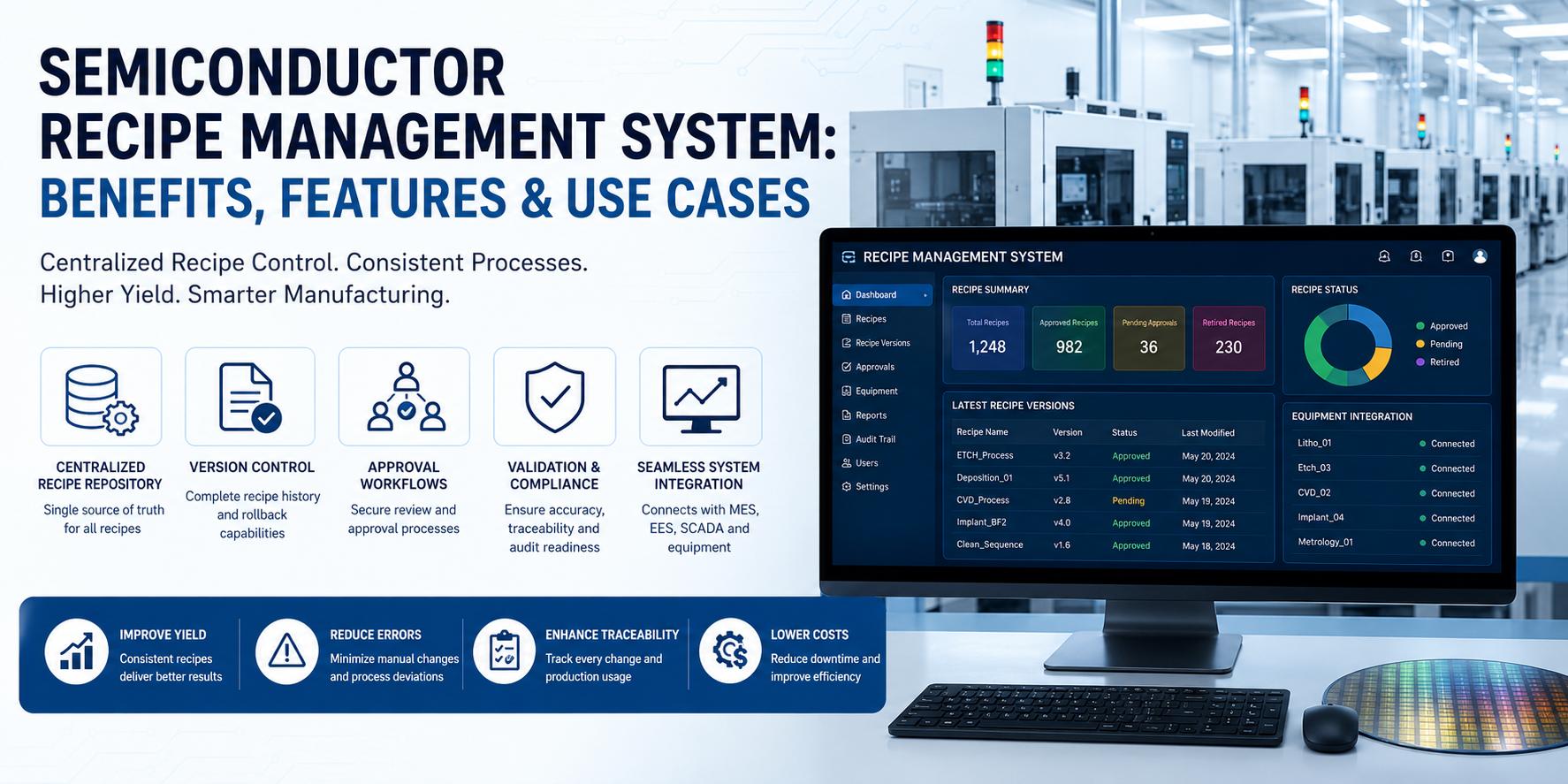
A Semiconductor Recipe Management System is a centralized platform that manages the creation, storage, distribution, validation, and tracking of equipment recipes used throughout semiconductor production.
Recipes contain critical process parameters such as:
- Temperature settings
- Process timing
- Gas flow rates
- Pressure values
- Power levels
- Equipment configurations
- Tool-specific operating parameters
Traditionally, recipe management relied on manual processes and localized storage within individual tools. However, as manufacturing complexity increased, centralized Recipe Management Software became essential for ensuring consistency and governance.
By integrating with equipment, MES platforms, and factory automation systems, manufacturers gain complete visibility and control over production recipes throughout their lifecycle.
Why Semiconductor Manufacturers Need Advanced Recipe Control
Semiconductor production environments often contain hundreds of process tools operating simultaneously. Managing recipe changes manually can create significant operational risks.
A modern Semiconductor Recipe Management System addresses several common challenges:
Preventing Unauthorized Changes
Unauthorized modifications can impact product quality and production stability. Centralized approval workflows ensure that only authorized personnel can modify recipes.
Maintaining Process Consistency
Consistent recipes across equipment and production lines help maintain repeatable manufacturing outcomes.
Supporting Regulatory Compliance
Many semiconductor manufacturers must maintain detailed audit trails for customer, quality, and operational requirements.
Reducing Human Error
Automated recipe validation minimizes the risk of loading incorrect process parameters into production equipment.
Effective Semiconductor Recipe Management improves operational discipline while supporting continuous process optimization initiatives.
Key Features of a Semiconductor Recipe Management System
Modern semiconductor facilities require much more than simple recipe storage capabilities. Advanced systems offer a wide range of features designed for high-volume manufacturing environments.
Centralized Recipe Repository
A centralized database provides a single source of truth for all approved recipes. Engineers can quickly access the latest versions while maintaining historical records.
Recipe Version Control
A built-in Recipe Version Control System tracks every modification made to production recipes.
Benefits include:
- Change history tracking
- Version comparison
- Rollback capabilities
- User activity logging
- Audit readiness
Version control is especially important in semiconductor manufacturing, where even small parameter changes can significantly affect yield.
Approval Workflow Management
Before recipes are released to production, organizations can require formal review and approval processes.
Typical workflow stages include:
- Development
- Validation
- Engineering approval
- Production release
- Revision control
This structured approach strengthens Semiconductor Recipe Control across the factory.
Automated Recipe Validation
The system can automatically compare tool recipes against approved master versions.
Validation capabilities help identify:
- Parameter mismatches
- Unauthorized changes
- Missing values
- Incorrect recipe downloads
Automated validation reduces the risk of process deviations and production defects.
Supporting Semiconductor Factory Automation
As semiconductor manufacturers adopt Industry 4.0 strategies, recipe management becomes a critical component of broader automation initiatives.
A Semiconductor Recipe Management System integrates with:
- Manufacturing Execution Systems (MES)
- SECS/GEM interfaces
- Equipment Engineering Systems (EES)
- SCADA platforms
- Process Control Systems
Through these integrations, recipes can be automatically deployed, verified, and monitored throughout production.
This level of connectivity enhances Semiconductor Factory Automation by reducing manual intervention and improving operational efficiency.
MES Recipe Management Integration
Manufacturing Execution Systems play a central role in coordinating production activities across the fab.
Integrating a Semiconductor Recipe Management System with MES platforms provides several advantages:
Automated Recipe Verification
The MES can verify that the correct recipe is loaded before production begins.
Product-to-Recipe Matching
Recipes are automatically associated with specific products and process flows.
Production Traceability
Manufacturers can track exactly which recipe version was used for every lot processed.
Improved Quality Control
Recipe compliance checks help ensure process consistency across production runs.
Effective MES Recipe Management significantly improves operational control and product traceability.
Equipment Recipe Management Across Multiple Tools
Modern semiconductor facilities often contain equipment from multiple OEMs and generations.
Managing recipes across diverse platforms can be challenging without centralized control.
A comprehensive Equipment Recipe Management solution enables: