
How SECS GEM Host Simulators Accelerate Semiconductor Factory Integration
Introduction
Semiconductor manufacturing is one of the most complex industrial environments in the world. Every tool, system, and process must communicate seamlessly to ensure high yield, consistent quality, and optimized throughput. This is where SECS GEM Host systems play a critical role, acting as the communication bridge between factory software and equipment.
However, integrating these systems in a real production environment is not always straightforward. Delays, compatibility issues, and unexpected behavior can disrupt operations and extend project timelines. To overcome these challenges, companies increasingly rely on SECS GEM Host Simulators—a powerful solution designed to test, validate, and accelerate integration before deployment.
In this blog, we’ll explore how SECS GEM Host Simulators streamline semiconductor factory integration, reduce risks, and improve overall efficiency.
Understanding SECS GEM Host and Its Role in Integration
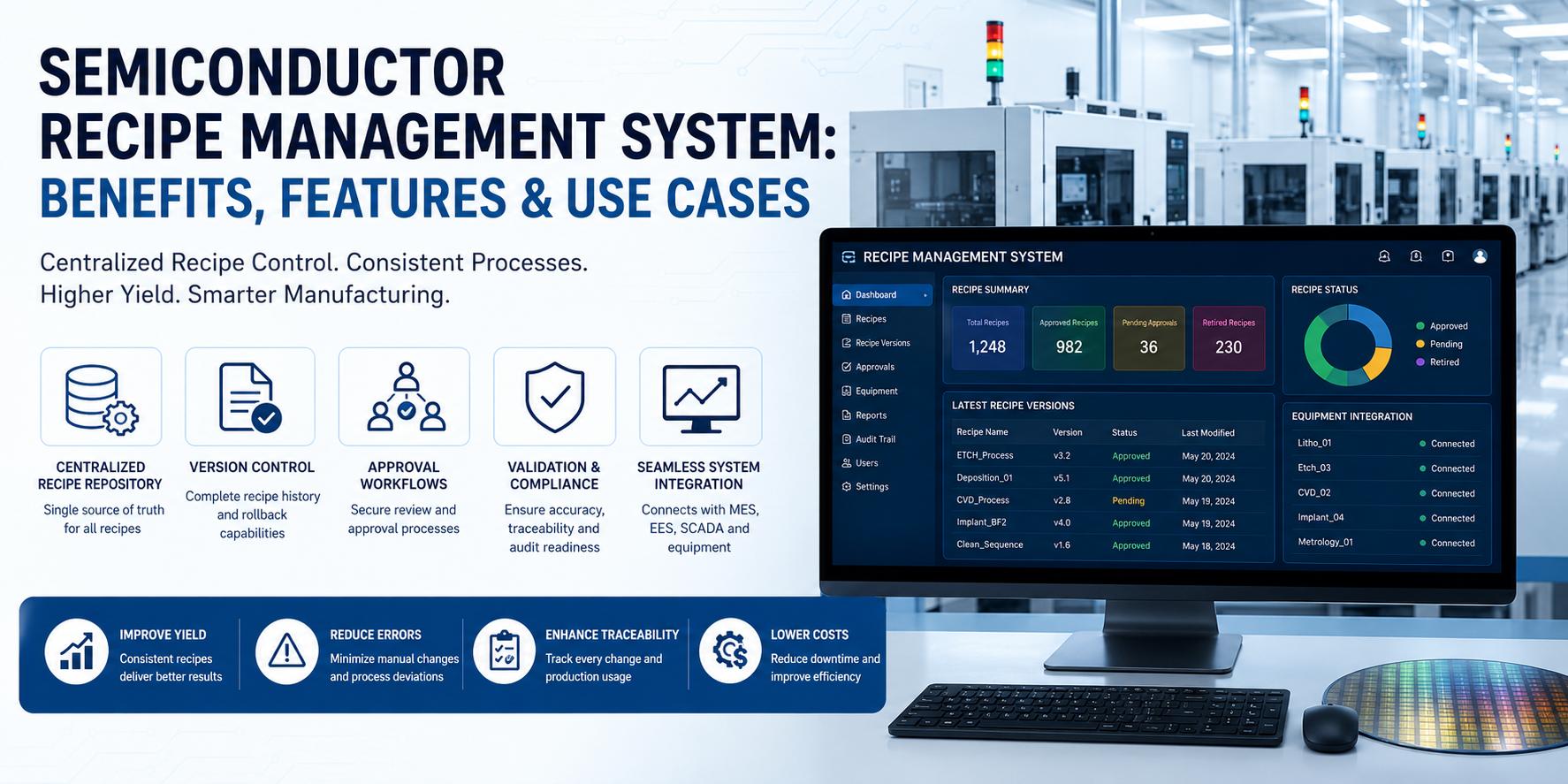
At the heart of semiconductor factory automation lies the SECS GEM Host, which enables communication between equipment and host systems such as MES (Manufacturing Execution Systems). It ensures that tools can send and receive data, execute commands, and report statuses in a standardized way.
Without a properly configured SECS GEM Host, factory automation becomes fragmented. Equipment may operate in isolation, leading to inefficiencies, data silos, and increased manual intervention.
The integration process involves:
- Establishing communication protocols
- Validating message formats
- Testing event handling and alarms
- Ensuring compliance with SEMI standards
This is where challenges begin. Real equipment may not always be available for testing, or it may be risky to perform live integration in a production environment. That’s why SECS GEM Host Simulators are essential—they replicate equipment behavior in a controlled and flexible environment.
What Are SECS GEM Host Simulators?
SECS GEM Host Simulators are software tools that emulate the behavior of semiconductor equipment or host systems. They allow engineers to test communication, validate workflows, and troubleshoot issues without relying on physical machines.
Instead of waiting for actual equipment availability, teams can use a SECS GEM Host Simulator to:
- Simulate equipment responses
- Validate host commands
- Test different scenarios (normal and edge cases)
- Debug communication issues
These simulators are particularly valuable during early stages of Semiconductor Factory Integration, where quick iteration and validation are critical.
Accelerating Integration with SECS GEM Host Simulators
1. Early Testing Without Equipment Dependency
One of the biggest advantages of SECS GEM Host Simulators is the ability to start integration before the actual equipment arrives. This eliminates delays and allows parallel development.
Engineers can configure the SECS GEM Host, test communication flows, and validate message exchanges well in advance. By the time real equipment is installed, most integration issues are already resolved.
This significantly accelerates Semiconductor Factory Integration, reducing overall project timelines.
2. Risk Reduction in Production Environments
Testing directly on live equipment can be risky. A misconfigured SECS GEM Host or incorrect command can disrupt operations or even damage equipment.
With SECS GEM Host Simulators, teams can safely test:
- Alarm handling
- Recipe management
- Event triggering
- Error scenarios
This controlled environment ensures that only validated configurations are deployed, minimizing risks during actual integration.
3. Improved Debugging and Troubleshooting
Integration issues are inevitable, especially in complex semiconductor environments. Identifying the root cause can be time-consuming when working with real equipment.
A SECS GEM Host Simulator provides detailed visibility into communication flows, making it easier to:
- Analyze message logs
- Identify protocol mismatches
- Test alternative configurations
By using SECS GEM Host Simulators, engineers can quickly isolate and resolve issues, ensuring smoother Semiconductor Factory Integration.
4. Faster Compliance with SEMI Standards
Compliance with SEMI standards is critical for interoperability in semiconductor manufacturing. A properly implemented SECS GEM Host must adhere to standards like SECS-II and GEM.
SECS GEM Host Simulators help validate compliance by:
- Testing standard message structures
- Verifying event reporting
- Ensuring correct state transitions
This reduces the risk of non-compliance and ensures that equipment can seamlessly integrate into the factory ecosystem.
5. Enhanced Training and Skill Development
Another often overlooked benefit of SECS GEM Host Simulators is their role in training. Engineers and operators can use simulators to understand system behavior without impacting real production.
Teams can practice:
- Handling alarms and events
- Executing commands via the SECS GEM Host
- Troubleshooting communication issues
This hands-on experience improves confidence and reduces errors during actual Semiconductor Factory Integration.
6. Supporting Scalable and Future-Ready Integration
Modern semiconductor fabs are constantly evolving. New equipment, upgrades, and process changes require continuous integration efforts.
SECS GEM Host Simulators provide a scalable solution for ongoing testing and validation. As factories grow, these simulators ensure that new systems can be integrated quickly and efficiently.
By leveraging SECS GEM Host Simulators, organizations can build a flexible and future-ready integration strategy.
Real-World Impact: Why Industry Leaders Use Simulators
Leading semiconductor manufacturers rely on SECS GEM Host Simulators to maintain competitive advantage. The benefits are clear:
Reduced integration time by up to 30–50%
Lower risk of production disruptions
Improved system reliability and uptime
Faster deployment of new tools and technologies
In high-volume manufacturing environments, even small improvements in integration efficiency can lead to significant cost savings and productivity gains.
Best Practices for Using SECS GEM Host Simulators
To maximize the value of SECS GEM Host Simulators, organizations should follow these best practices:
✔ Use Simulators Early in the Project
Start testing the SECS GEM Host as soon as the requirements are defined.
✔ Simulate Real-World Scenarios
Include both normal operations and edge cases to ensure robust integration.
✔ Validate Against Standards
Ensure that all communication aligns with SEMI standards.
✔ Integrate with MES and SCADA
Test end-to-end workflows to ensure seamless Semiconductor Factory Integration.
✔ Continuously Update Simulation Models
Keep simulators aligned with actual equipment behavior for accurate testing.
Conclusion
In today’s fast-paced semiconductor industry, speed, accuracy, and reliability are critical for successful factory integration. The SECS GEM Host plays a central role in enabling communication between systems, but its implementation can be complex and challenging.
This is where SECS GEM Host Simulators make a significant difference. By enabling early testing, reducing risks, improving debugging, and ensuring compliance, these tools accelerate Semiconductor Factory Integration and enhance overall operational efficiency.
Organizations that adopt SECS GEM Host Simulators gain a clear advantage—they can deploy faster, operate more reliably, and adapt quickly to changing manufacturing demands.
As semiconductor fabs continue to evolve with AI, automation, and smart manufacturing technologies, the role of SECS GEM Host Simulators will only become more critical in building connected, intelligent, and future-ready factories.