
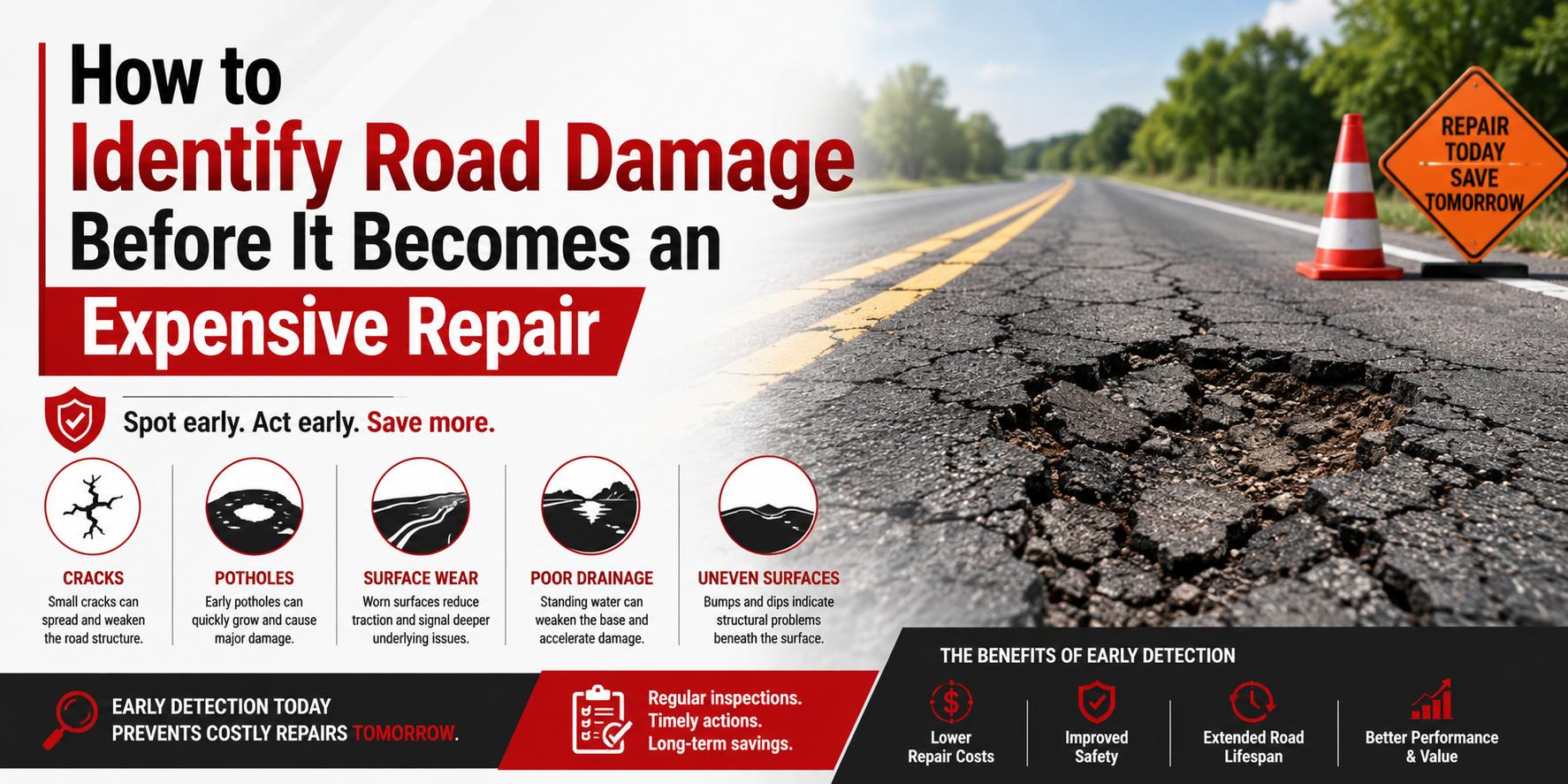
How To Identify Road Damage Before It Becomes An Expensive Repair
Road surfaces are constantly exposed to traffic loads, weather conditions, water infiltration, and natural wear and tear. Small signs of deterioration can quickly develop into major structural failures if left untreated. Identifying road damage at an early stage helps property owners, facility managers, municipalities, and businesses reduce road maintenance costs, improve safety, and extend pavement life. Whether managing a commercial driveway, industrial facility, parking area, or public roadway, understanding the warning signs of pavement distress can save significant repair expenses in the long run.
Why Early Road Damage Detection Matters
Minor pavement defects may appear harmless initially, but they often indicate deeper issues beneath the surface. Water penetration, inadequate drainage, heavy vehicle loads, and aging materials can accelerate deterioration.
When road damage is identified and repaired promptly, organizations can:
- Prevent costly full-depth reconstruction
- Reduce safety hazards for drivers and pedestrians
- Minimize disruptions to daily operations
- Extend the lifespan of road infrastructure
- Improve the overall appearance of paved surfaces
Regular inspections are one of the most effective ways to maintain pavement quality and control maintenance budgets.
Common Types of Road Damage to Watch For
1. Cracks in the Pavement
Cracks are usually the earliest visible sign of pavement deterioration. They allow water to penetrate beneath the surface, weakening the base layers and accelerating damage.
Common crack types include:
Longitudinal Cracks
These run parallel to the road's centerline and often result from pavement aging, temperature changes, or poor construction joints.
Transverse Cracks
These appear perpendicular to traffic flow and are commonly caused by shrinkage and temperature fluctuations.
Block Cracking
A series of interconnected cracks forming rectangular patterns often indicates aging asphalt and reduced flexibility.
Alligator Cracking
This severe form of cracking resembles reptile skin and usually signals structural failure beneath the pavement surface. Early crack sealing can prevent water intrusion and significantly reduce future repair costs.
2. Potholes
Potholes are among the most visible and hazardous forms of road damage. They develop when water enters cracks, weakens the underlying base, and causes the pavement to collapse under traffic loads.
Signs that potholes may be forming include:
- Small depressions in the pavement
- Loose asphalt particles
- Standing water after rain
- Surface crumbling around cracks
Addressing potholes early prevents them from expanding and causing vehicle damage or safety concerns.
3. Surface Raveling
Raveling occurs when aggregate particles begin separating from the asphalt surface. The pavement gradually loses its smooth texture and becomes rough.
Common causes include:
- Aging asphalt
- Oxidation from sunlight
- Poor asphalt mix quality
- Traffic wear
Early raveling can often be treated through seal coating and surface maintenance before major resurfacing becomes necessary.
4. Depressions and Rutting
Rutting appears as grooves or channels along vehicle wheel paths. This type of damage develops when the pavement structure cannot adequately support traffic loads.
Potential causes include the following:
- Weak base layers
- Poor compaction during installation
- Repeated heavy vehicle traffic
- Excessive pavement deformation
If left untreated, rutting can collect water and create dangerous driving conditions.
5. Edge Deterioration
Road edges are particularly vulnerable to damage because they receive less structural support than the center portion of the pavement.
Warning signs include:
- Crumbling pavement edges
- Broken asphalt sections
- Shoulder separation
- Vegetation intrusion
Maintaining road edges helps prevent progressive pavement failures that can spread inward.
6. Drainage Problems
Water is one of the biggest threats to pavement longevity. Poor drainage accelerates nearly every type of pavement damage.
Look for:
- Standing water after rainfall
- Blocked drainage channels
- Water flowing across pavement surfaces
- Soft pavement areas
Improving drainage systems can significantly extend pavement service life and reduce maintenance expenses.
Warning Signs That Require Immediate Attention
Some pavement defects indicate more serious structural problems and should be evaluated quickly.
These include:
- Rapidly expanding cracks
- Large potholes
- Extensive alligator cracking
- Significant rutting
- Sinkholes or severe depressions
- Frequent water pooling
Ignoring these issues can lead to complete pavement failure and substantially higher repair costs.
How Weather Affects Road Damage
Climate plays a major role in pavement deterioration.
Heavy Rainfall
Water penetrates pavement cracks and weakens underlying layers, leading to potholes and structural failures.
Extreme Heat
High temperatures can soften asphalt surfaces, making them more susceptible to deformation under heavy loads.
UV Exposure
Continuous sunlight exposure causes asphalt oxidation, resulting in brittleness and increased cracking.
Temperature Fluctuations
Repeated expansion and contraction cycles create stress within pavement materials, contributing to crack formation. Regular inspections after severe weather events can help identify emerging issues before they worsen.
Conducting Effective Road Inspections
Routine inspections help identify maintenance needs early.
Visual Surface Assessment
Inspect pavement surfaces for:
- Cracks
- Potholes
- Surface wear
- Standing water
- Edge damage
Monitor Traffic Areas
Pay special attention to:
- Loading zones
- Parking areas
- Entrance roads
- Heavy vehicle routes
These areas experience higher stress and often deteriorate faster.
Document Changes
Maintain records of pavement conditions over time. Photographs and inspection reports help track damage progression and support maintenance planning.
Preventive Maintenance Strategies
Preventive maintenance is far more cost-effective than major reconstruction projects.
Effective strategies include:
Crack Sealing
Sealing cracks prevents water infiltration and slows pavement deterioration.
Seal Coating
Protective seal coats shield asphalt from UV damage, oxidation, and moisture penetration.
Pothole Repairs
Prompt patching prevents further pavement degradation and safety risks.
Drainage Improvements
Maintaining proper drainage reduces water-related pavement failures.
Regular Professional Inspections
Experienced pavement maintenance specialists can identify hidden issues before they become expensive structural repairs.
When to Contact Pavement Maintenance Experts
While routine visual inspections are valuable, some road conditions require professional evaluation. Experts can determine whether damage is cosmetic, surface-level, or structural.
Organizations should seek professional assistance when they notice:
- Extensive cracking patterns
- Recurring potholes
- Drainage failures
- Significant surface deformation
- Large-scale pavement deterioration
Professional assessments help prioritize repairs and maximize maintenance budgets.
Conclusion
Road damage rarely appears overnight. Most major pavement failures begin as small cracks, minor depressions, or drainage issues that gradually worsen over time. By conducting regular inspections, addressing defects early, and implementing preventive maintenance programs, property owners and facility managers can significantly reduce repair costs and extend pavement lifespan.
Investing in early detection and timely maintenance helps protect road infrastructure, improve safety, and avoid expensive reconstruction projects. Working with experienced pavement maintenance specialists such as Paves Asia Pacific ensures that potential problems are identified and resolved before they develop into major financial burdens.
FAQs
Q1. What are the earliest signs of road damage?
A1. Small cracks, surface raveling, minor depressions, and water pooling are often the first indicators of pavement deterioration.
Q2. How often should roads be inspected for damage?
A2. Commercial and industrial pavements should be inspected at least twice annually and after major weather events.
Q3. Can small cracks lead to major road repairs?
A3. Yes. Small cracks allow water infiltration, which weakens the pavement foundation and can lead to potholes and structural failures.
Q4. What causes potholes to form?
A4. Potholes typically develop when water enters cracks, weakens the base layer, and traffic pressure causes the pavement surface to collapse.
Q5. Why is preventive road maintenance important?
A5. Preventive maintenance extends pavement life, improves safety, and significantly reduces long-term repair costs.