
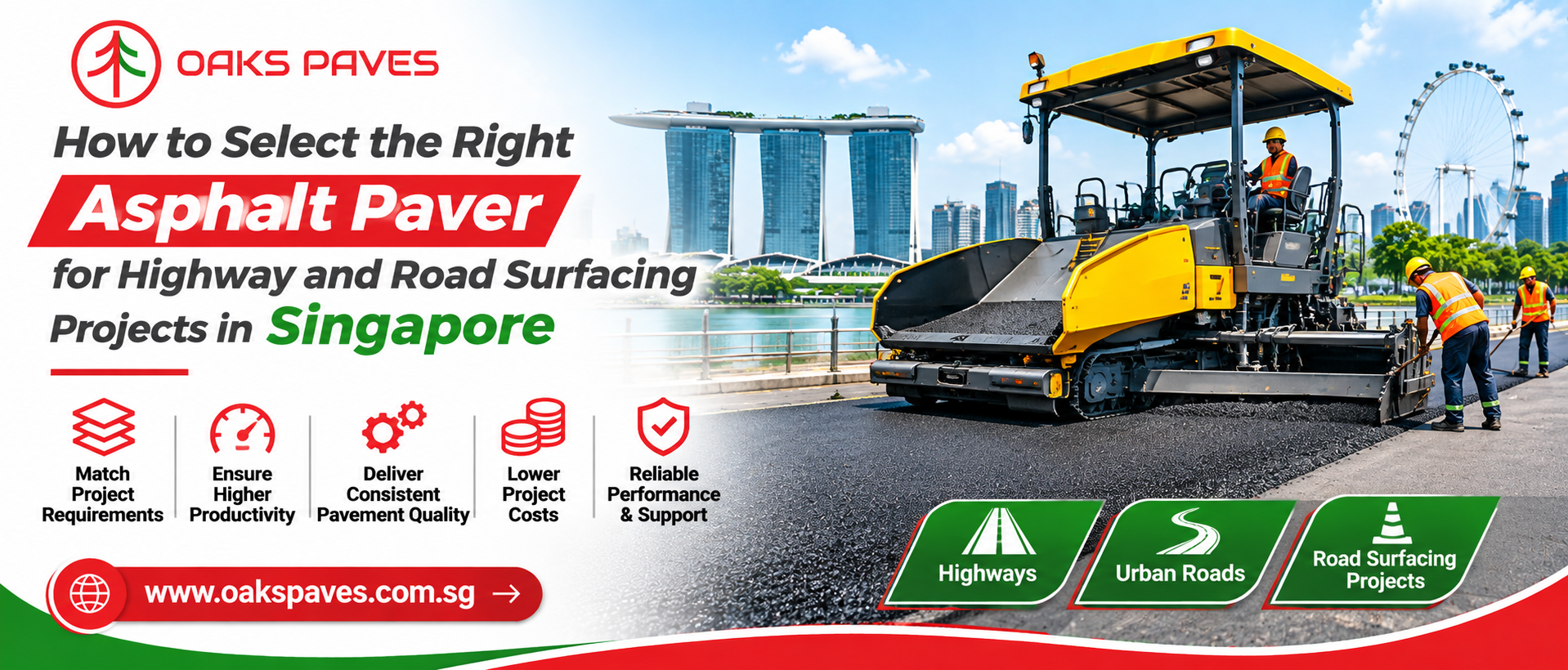
How To Select The Right Asphalt Paver For Highway And Road Surfacing Projects In Singapore
Selecting the right asphalt paver is an important decision for contractors handling highway construction, road resurfacing, and infrastructure development projects in Singapore. The equipment used during asphalt laying directly affects paving consistency, surface quality, construction productivity, and project scheduling.
Different road projects require different paving capabilities. A highway project may need a high-capacity machine with a wide paving range, while urban road resurfacing may require compact equipment that can operate efficiently in restricted spaces. Choosing an unsuitable machine can result in inconsistent paving, unnecessary equipment costs, construction delays, and additional material wastage.
For contractors considering asphalt paver rental services in Singapore, understanding machine specifications, project requirements, operating conditions, and rental arrangements is essential before making a decision.
How Do You Select the Right Asphalt Paver?
Choose an asphalt paver according to project size, required paving width, asphalt layer thickness, material supply capacity, site access, and expected daily output.
Before renting or hiring a machine, evaluate these factors:
- Paving width: Match the machine's operating width to the road design and project layout.
- Paving capacity: Ensure the machine can handle the required asphalt supply and construction schedule.
- Screed technology: Check whether the screed supports the specified layer thickness and surface requirements.
- Site conditions: Consider available working space, road access, gradients, and traffic management.
- Machine condition: Inspect the paver's operating condition and maintenance history.
- Operator support: Confirm the availability of qualified operators and technical assistance.
- Rental costs: Compare the complete rental package, including transportation, mobilisation, and additional charges.
The right asphalt paver should match the project's technical specifications and production requirements rather than simply being the largest or cheapest available machine.
1. Understand Your Road Surfacing Project Requirements
Before selecting an asphalt paver, define the requirements of the road construction or resurfacing project. The machine's specifications should match the planned paving operation, not the other way around.
Start by reviewing the project drawings, pavement design, road dimensions, and construction schedule.
Important factors include:
Project size: A large highway project may require higher paving capacity and wider working coverage than a small road maintenance assignment.
Paving width: Determine whether the work involves a single wide paving pass, multiple passes, or variable-width sections.
Layer thickness: The required asphalt layer thickness influences screed setup and paving performance.
Daily production target: Estimate how much asphalt needs to be placed during each working shift.
Site access: Check whether the machine can reach the work area and maneuver safely around existing infrastructure.
Project duration: Consider whether the paver is needed for a few days, several weeks, or an extended construction program.
Clear project requirements help contractors identify suitable equipment and avoid paying for unnecessary capacity.
2. Select the Appropriate Paving Width and Machine Capacity
Paving width is one of the most important specifications when selecting an asphalt paver. The machine should be capable of laying asphalt according to the project's required road width and construction method.
A machine with insufficient paving width may require additional passes, increasing construction time and potentially creating more longitudinal joints. A wider paver may improve productivity on suitable open road sections, but it may not be practical for every site.
When comparing asphalt paving equipment rental Singapore options, evaluate:
- Standard and maximum paving width.
- Screed extension arrangements.
- Asphalt material handling capacity.
- Hopper capacity.
- Conveyor and auger configuration.
- Operating speed and production requirements.
Machine capacity should also match the asphalt supply arrangement. If the paver can place material faster than the supply vehicles can deliver it, the operation may experience interruptions. Conversely, excessive material supply without sufficient laying capacity can create site handling difficulties.
The goal is to maintain a coordinated paving operation in which material delivery, machine performance, and compaction equipment work together.
3. Choose the Right Asphalt Paver for Highway Projects
Highway surfacing projects generally involve larger work areas, substantial asphalt quantities, and demanding construction schedules. These projects may require machines capable of maintaining consistent paving operations over long road sections.
When selecting highway paving equipment rental in Singapore, consider:
High production capability: The paver should support the project's required material placement rate and work schedule.
Wide paving coverage: Suitable paving width can help reduce the number of passes on appropriate road sections.
Consistent material distribution: The conveyor and auger systems should distribute asphalt evenly across the screed.
Screed performance: The screed should support the specified paving width, layer thickness, and surface finish.
Operational reliability: Machine condition and maintenance support are important when equipment is expected to operate for extended periods.
Highway work may also involve traffic diversions, restricted working windows, and coordination with other construction activities. Contractors should confirm that the selected machine can be transported, mobilised, and operated within the project's site arrangements.
4. Consider Compact Asphalt Pavers for Urban Road Surfacing
Not every road surfacing project requires a large highway paver. Urban roads, junctions, narrow streets, small access roads, and localised resurfacing projects may have restricted working areas.
A compact or appropriately configured asphalt finisher may be more practical where manoeuvrability and access are important.
Before arranging asphalt finisher rental Singapore, evaluate:
- Available road width.
- Space for material delivery vehicles.
- Turning and manoeuvring requirements.
- Nearby buildings and roadside infrastructure.
- Required paving width.
- Site access and traffic management arrangements.
A smaller machine may be easier to position in confined spaces, but its production capacity must still meet the project's requirements.
Contractors should balance machine size, paving capability, and site accessibility to select equipment that can complete the work efficiently without compromising the specified pavement quality.
5. Evaluate Screed Technology and Paving Quality
The screed is a critical part of an asphalt paver because it helps distribute and shape the asphalt layer before compaction.
Selecting suitable screed technology is important for achieving the specified layer thickness, width, and surface profile.
When evaluating a road paving machine rental Singapore option, check:
Screed type: Confirm whether the machine uses a fixed-width or extendable screed suitable for the planned work.
Heating system: Check that the screed heating system is operational and maintained according to the manufacturer's instructions.
Crown adjustment: Where required, confirm that the equipment can accommodate the specified road profile.
Material distribution: Check the condition and operation of the augers and conveyors.
Thickness control: Ensure the machine can be adjusted to meet the approved paving design.
The paver's performance alone does not determine final pavement quality. Asphalt temperature, material consistency, underlying surface preparation, laying technique, and subsequent compaction also play important roles.
6. Compare Asphalt Paver Rental Costs and Contract Terms
Rental cost is an important part of equipment planning. Contractors should compare quotations carefully instead of selecting a machine based only on its daily or weekly rental rate.
The total cost of asphalt paver hire in Singapore may depend on:
- Machine type and operating capacity.
- Rental duration.
- Daily, weekly, or monthly pricing.
- Transportation and mobilisation.
- Operator charges, where applicable.
- Fuel and operating arrangements.
- Maintenance and breakdown support.
- Additional charges for extended working hours.
Ask rental providers for a detailed quotation that explains what is included and what may be charged separately.
For longer projects, compare the total rental cost against the expected utilisation period. A machine hired for a longer duration may have different commercial terms from short-term equipment rental.
Also clarify responsibility for routine servicing, unexpected breakdowns, replacement arrangements, and equipment damage.
A transparent rental agreement helps contractors manage budgets and avoid misunderstandings during construction.
7. Check Machine Condition, Operator Support, and Maintenance
An asphalt paver must be in suitable operating condition before arriving at the construction site. Equipment problems during paving can interrupt material placement and affect the construction schedule.
Before accepting the machine, inspect:
- Engine and hydraulic system.
- Conveyor and auger operation.
- Screed condition and heating system.
- Controls and operating instruments.
- Tracks or wheels.
- Safety features and warning systems.
- General maintenance condition.
Ask the supplier about recent servicing, maintenance records, and procedures for reporting technical problems.
Operator experience is equally important. A trained operator should understand machine controls, material distribution, screed adjustment, and coordination with asphalt delivery vehicles.
For road construction equipment rental in Singapore, contractors should confirm whether operator services are included or whether they must arrange their own qualified personnel.
8. Coordinate the Asphalt Paver with the Complete Paving Operation
An asphalt paver works as part of a wider construction process. Its productivity depends on the availability of asphalt mix, transport vehicles, site preparation, and compaction equipment.
Before starting the project, coordinate:
- Asphalt production and delivery schedules.
- Material transportation to the construction site.
- Road surface preparation and cleaning.
- Paver mobilisation and setup.
- Asphalt placement and screed adjustments.
- Roller coordination and compaction.
- Quality checks and surface inspection.
Material delivery should be planned to reduce unnecessary waiting and interruptions. The paving team should also follow the approved temperature and compaction requirements for the selected asphalt mix.
For asphalt laying machine rental Singapore, consider the entire paving workflow rather than evaluating the paver as an isolated piece of equipment.
Why Work with an Experienced Equipment Supplier?
Choosing an equipment supplier involves more than checking machine availability. Contractors benefit from clear communication, accurate equipment specifications, transparent rental conditions, and responsive technical support.
A suitable supplier should understand the difference between highway paving, urban resurfacing, and industrial road construction requirements. It should also provide information about machine capacity, paving width, availability, transportation, and operating arrangements.
For project-specific equipment enquiries, Oaks Paves Pte Ltd can help contractors explore suitable road surfacing equipment options based on their operational requirements.
Conclusion
Selecting the right asphalt paver for highway and road surfacing projects in Singapore requires careful evaluation of project size, paving width, machine capacity, screed performance, site access, and rental conditions.
Highway projects may require higher-capacity equipment, while urban resurfacing work may benefit from compact machines with suitable manoeuvrability. In every case, machine condition, operator capability, asphalt supply, and compaction coordination contribute to successful paving operations.
By comparing specifications and understanding the complete rental arrangement, contractors can select equipment that matches their project requirements. Oaks Paves Pte Ltd is an option for contractors exploring equipment and road surfacing requirements in Singapore.
FAQs
Q1. How do I choose the right asphalt paver for a highway project?
A1. Consider paving width, production capacity, screed configuration, asphalt supply, project size, and the required surface specifications. The machine should match the approved construction plan.
Q2. What should I check before arranging asphalt paver rental in Singapore?
A2. Check machine specifications, operating condition, rental duration, transportation costs, operator availability, maintenance support, and breakdown arrangements.
Q3. What is the difference between an asphalt paver and an asphalt finisher?
A3. The terms are commonly used interchangeably for equipment that spreads and levels asphalt during paving. Specific machine configurations and capabilities can vary.
Q4. Is a compact asphalt paver suitable for road resurfacing?
A4. A compact paver may be suitable for smaller roads, narrow sections, and restricted working areas, provided its paving capacity and specifications meet project requirements.
Q5. What factors affect asphalt paver rental costs in Singapore?
A5. Rental costs may depend on machine size, capacity, rental duration, transportation, mobilisation, operator charges, fuel arrangements, and maintenance support.