
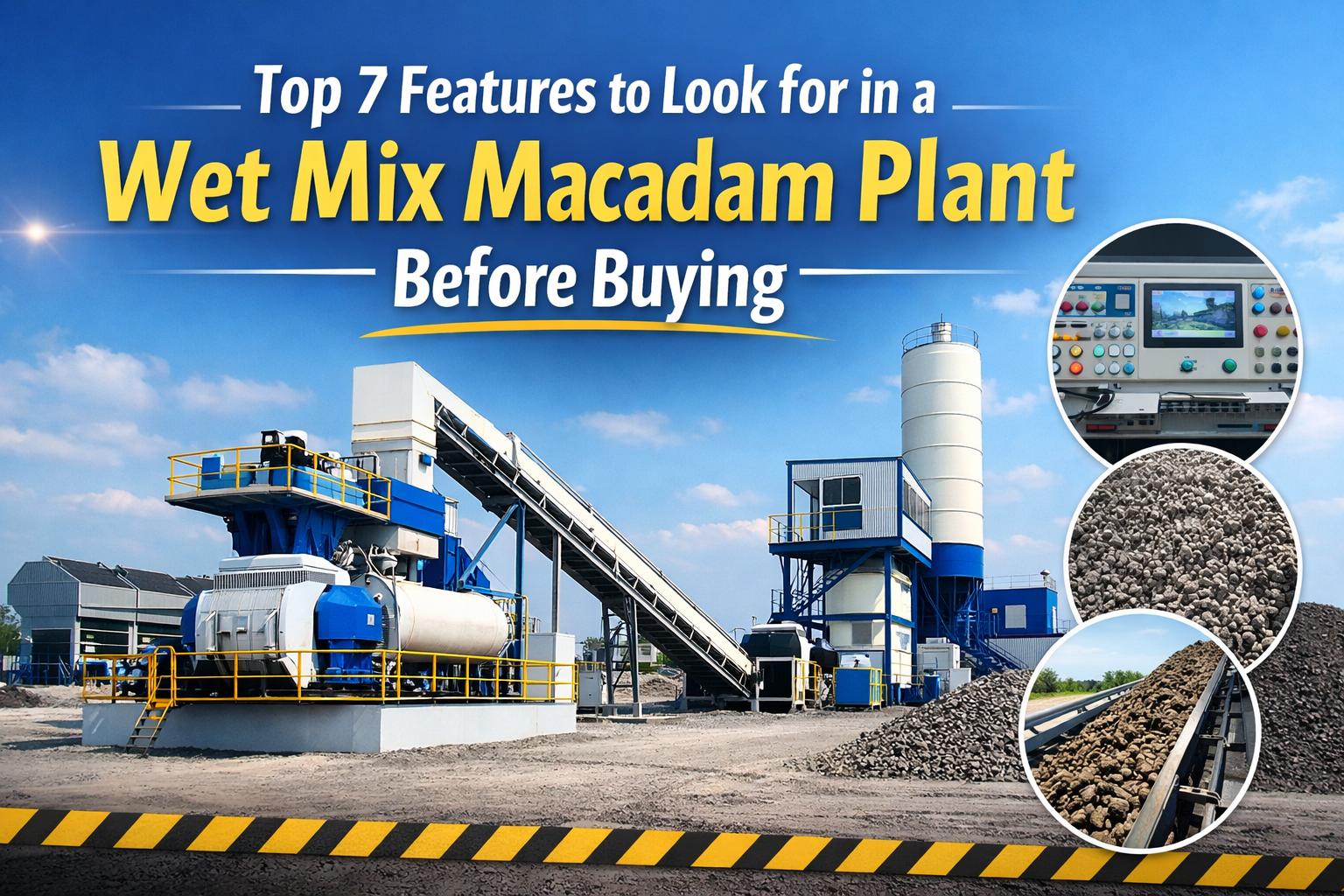
Top 7 Features To Look For In A Wet Mix Macadam Plant Before Buying
Choosing the right wet mix macadam (WMM) plant is a critical decision for contractors, infrastructure developers, and project managers. With road construction demands increasing across India, selecting reliable and efficient civil construction machinery can directly impact project timelines, cost efficiency, and long-term performance.
A wet mix macadam plant plays a vital role in producing uniform and high-quality base material for road construction. However, not all plants are built the same. Understanding key features before investing can help you avoid costly mistakes and ensure optimal output.
In this guide, we’ll walk you through the top 7 features you must evaluate before buying a WMM plant.
1. Production Capacity and Output Efficiency
One of the first things to consider is the plant’s production capacity. Wet mix macadam plants are available in different capacities, typically ranging from 100 TPH to 300 TPH or more.
Choosing the right capacity depends on:
Project scale
Daily material requirements
Project deadlines
A higher capacity plant ensures faster completion but also comes with higher investment. On the other hand, a smaller plant may slow down operations. Efficient civil engineering construction equipment should maintain consistent output without compromising quality. Look for machines that offer uniform mixing and minimal downtime.
2. Quality of Mixing Unit
The mixing unit is the heart of any wet mix macadam plant. Its performance directly affects the quality of the final product.
Key aspects to evaluate:
Twin shaft or pugmill mixer quality
Uniform water and aggregate distribution
Durability of mixing blades
A high-quality mixing system ensures proper blending of aggregates, water, and additives, resulting in a strong and durable road base. Poor mixing can lead to uneven layers and long-term road damage, increasing maintenance costs.
3. Robust Control System and Automation
Modern civil construction equipment is increasingly automated to improve precision and reduce human error.
A good WMM plant should include:
PLC-based control panel
User-friendly interface
Real-time monitoring system
Automation helps operators control:
Material flow
Water content
Mixing consistency
Advanced control systems not only improve productivity but also ensure consistent quality across batches.
4. Feeder Bins and Aggregate Handling System
Feeder bins play a crucial role in maintaining the correct proportion of aggregates.
Important features to look for:
Multiple bin configurations (3–5 bins)
Adjustable gates for precise material flow
Vibratory motors for smooth feeding
Efficient aggregate handling ensures that the plant delivers accurate mix ratios, which is essential for high-quality output. In large-scale projects, poorly designed feeders can cause interruptions and inconsistent production.
5. Water Dosing System
Water is a key component in wet mix macadam production. The correct amount of water ensures proper compaction and strength of the base layer.
Look for:
Automatic water dosing system
Flow control valves
Accurate measurement sensors
An advanced water system ensures uniform moisture content, which is critical for achieving the desired density and durability. This is one of the most overlooked aspects in machinery used in civil construction, yet it significantly affects road quality.
6. Mobility and Installation Flexibility
Depending on your project requirements, you may need a stationary or mobile plant.
Mobile Plants:
Easy to transport
Ideal for multiple project sites
Quick installation
Stationary Plants:
Higher production capacity
Suitable for long-term projects
If your projects frequently change locations, investing in a mobile unit can save time and logistics costs. Leading manufacturers like Atlas industries design plants that are easy to install, dismantle, and relocate, making them highly practical for contractors.
7. Durability, Build Quality, and Maintenance
Construction equipment is exposed to harsh conditions such as dust, heavy loads, and continuous operation.
Before buying, evaluate:
Material quality (steel thickness, corrosion resistance)
Wear-resistant components
Ease of maintenance
A durable plant reduces:
Downtime
Repair costs
Operational disruptions
Also, ensure that spare parts are easily available and service support is reliable. Good civil construction machinery should be built for long-term performance with minimal maintenance.
Why Choosing the Right WMM Plant Matters
Investing in the right wet mix macadam plant is not just about equipment it’s about ensuring project success.
A well-designed plant helps you:
Maintain consistent quality
Reduce operational costs
Improve project timelines
Enhance road durability
With increasing demand for infrastructure development, choosing reliable civil engineering construction equipment is more important than ever.
Common Mistakes to Avoid When Buying a WMM Plant
Before making a purchase, avoid these common errors:
Choosing based only on price
Ignoring after-sales service
Overlooking automation features
Not matching capacity with project needs
A cheap machine may save money upfront but can lead to higher maintenance costs and inefficiencies later.
Final Thoughts
A wet mix macadam plant is a crucial investment in any road construction project. By focusing on the right features capacity, mixing quality, automation, durability, and mobility you can ensure long-term efficiency and profitability.
Reliable manufacturers like Atlas Industries provide high-performance solutions designed to meet modern construction demands. Choosing the right equipment ensures that your projects are completed on time, within budget, and with superior quality.
FAQ's
1. What is a wet mix macadam plant in civil construction machinery?
A wet mix macadam plant is a type of civil construction machinery used to produce a uniform mixture of aggregates and water for road base layers.
2. How does civil engineering construction equipment improve road quality?
High-quality civil engineering construction equipment ensures consistent mixing, accurate material proportion, and long-lasting road performance.
3. What factors affect machinery used in civil construction projects?
Key factors include capacity, durability, automation, and ease of maintenance.
4. Is mobile civil construction equipment better than stationary plants?
Mobile plants are ideal for multiple locations, while stationary plants suit large, long-term projects.