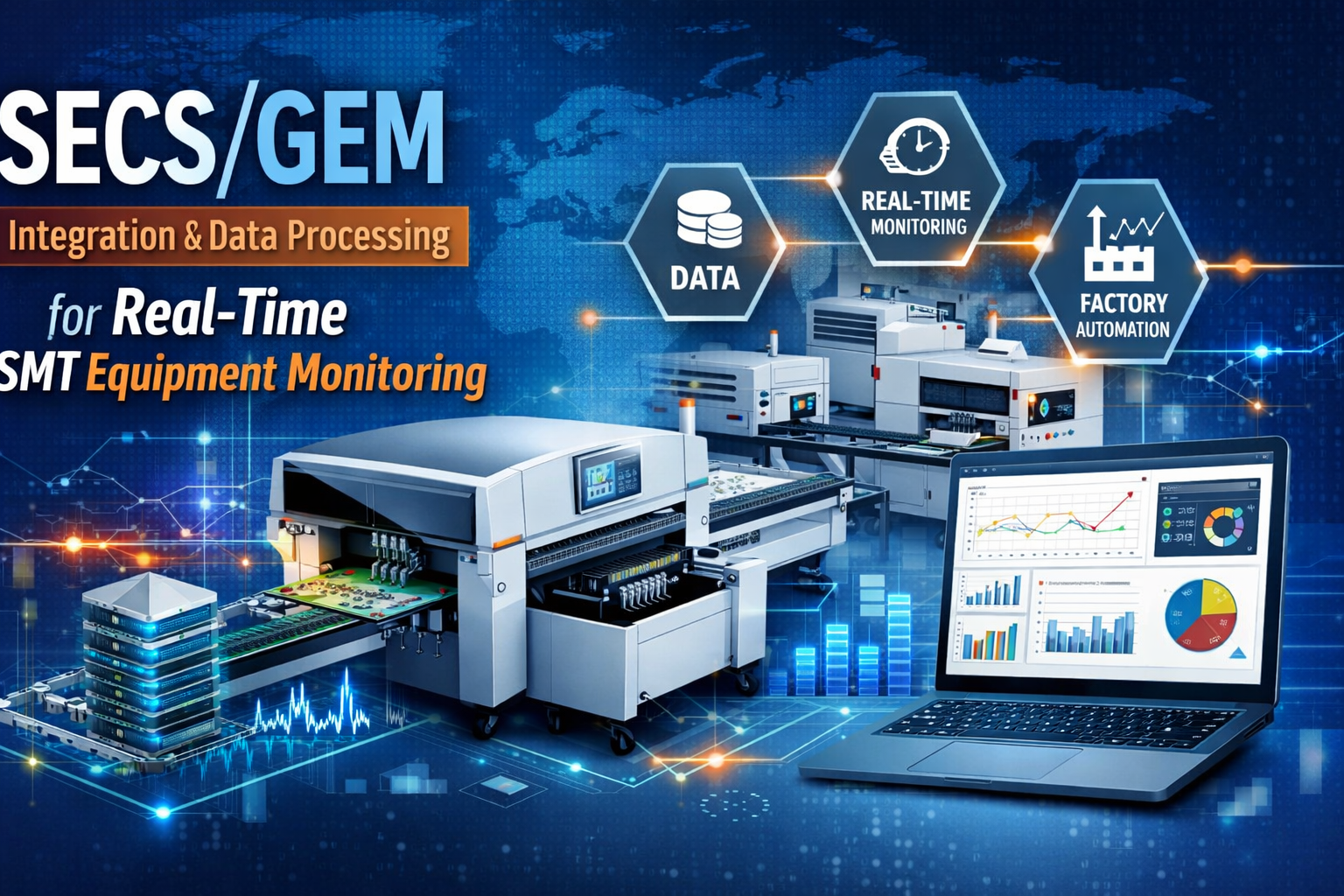
SECS/GEM Protocol Integration And Data Processing For Real-Time SMT Equipment Monitoring
Modern SMT (Surface Mount Technology) production lines are becoming smarter, faster, and more data-driven. Yet, many manufacturers still struggle with fragmented machine communication, delayed insights, and inefficient monitoring systems. This is where the SECS GEM protocol plays a critical role.
By enabling standardized communication between equipment and host systems, SECS/GEM integration allows manufacturers to build a powerful real-time equipment monitoring system that improves productivity, reduces downtime, and drives smarter decision-making.
Understanding SECS/GEM Protocol in SMT Manufacturing
The SECS GEM protocol (SEMI Equipment Communications Standard / Generic Equipment Model) is a widely adopted semiconductor equipment communication protocol that enables seamless interaction between factory equipment and host systems.
In SMT environments, where multiple machines such as pick-and-place systems, reflow ovens, SPI, and AOI machines operate simultaneously, communication becomes complex. SECS/GEM simplifies this by creating a unified language for machines and software systems.
Key Capabilities of SECS/GEM:
- Standardized machine-to-host communication
- Real-time event reporting
- Equipment status tracking
- Alarm management and notifications
- Recipe and process data exchange
With factory automation SECS GEM, SMT manufacturers can move toward fully connected and intelligent production lines.
Why Real-Time SMT Equipment Monitoring Matters
In a competitive manufacturing environment, delays in identifying issues can lead to significant losses. A real-time production monitoring system ensures that manufacturers always have up-to-date insights into machine performance and production status.
Benefits of Real-Time SMT Equipment Monitoring:
- Immediate detection of machine faults
- Reduced unplanned downtime
- Improved production efficiency
- Better quality control
- Enhanced traceability and compliance
By leveraging SMT equipment monitoring systems powered by SECS/GEM, factories can transition from reactive to proactive operations.
Role of SECS/GEM Integration in SMT Machine Data Monitoring
SECS/GEM integration acts as the backbone of SMT machine data monitoring. It enables continuous communication between machines and centralized systems such as MES (Manufacturing Execution Systems), SCADA, or custom dashboards.
How It Works:
- Equipment generates data (status, alarms, process parameters)
- SECS/GEM protocol transmits this data to the host
- The host system processes and stores the data
- Insights are visualized through dashboards and reports
This structured approach ensures accurate and reliable SECS GEM data collection, which is essential for advanced analytics and optimization.
SECS GEM Data Collection and Processing
Efficient SECS GEM data collection is the foundation of any industrial equipment monitoring software. However, collecting data alone is not enough—processing and analyzing it in real time is what creates value.
Types of Data Collected:
- Machine status (idle, running, error)
- Production counts and cycle times
- Alarm and event logs
- Process parameters (temperature, speed, pressure)
- Operator interactions
Data Processing Techniques:
- Real-time data streaming
- Edge computing for low latency
- Cloud-based analytics
- AI-driven predictive insights
By integrating data processing capabilities, manufacturers can build a highly responsive real-time equipment monitoring system that supports predictive maintenance and performance optimization.
Architecture of a Real-Time Equipment Monitoring System
A robust real-time production monitoring system built on SECS/GEM typically includes the following layers:
1. Equipment Layer
SMT machines equipped with SECS/GEM interfaces generate data continuously.
2. Communication Layer
The SECS GEM protocol ensures reliable and standardized data transmission.
3. Data Collection Layer
Middleware or gateways collect and normalize data from multiple machines.
4. Processing Layer
Data is processed using analytics engines or industrial platforms.
5. Visualization Layer
Dashboards provide real-time insights into production and equipment status.
This layered architecture ensures scalability, flexibility, and high performance in industrial equipment monitoring software.
Challenges in SECS/GEM Integration
While SECS/GEM integration offers numerous advantages, implementing it in real-world SMT environments comes with challenges:
Common Challenges:
- Legacy equipment without SECS/GEM support
- Complex configuration of communication protocols
- Data inconsistency across different machines
- Integration with existing MES or ERP systems
- Cybersecurity concerns
Solutions:
- Use protocol converters or gateways for legacy machines
- Standardize data formats across systems
- Implement secure communication channels
- Work with experienced automation providers
Addressing these challenges is essential for successful deployment of factory automation SECS GEM solutions.
Enhancing SMT Production with Industrial Equipment Monitoring Software
Advanced industrial equipment monitoring software built on SECS/GEM can transform manufacturing operations.
Key Features:
- Real-time dashboards and KPIs
- OEE (Overall Equipment Effectiveness) tracking
- Alarm and event management
- Historical data analysis
- Integration with MES and ERP systems
Such systems enable manufacturers to achieve higher efficiency, better quality, and reduced operational costs.
Real-World Use Case: SMT Line Optimization
Consider an SMT production line experiencing frequent downtime due to unidentified machine issues. By implementing a real-time equipment monitoring system using SECS/GEM:
- Machine status is monitored continuously
- Alerts are triggered instantly during faults
- Engineers receive actionable insights
- Downtime is reduced by up to 30%
- Production efficiency improves significantly
This demonstrates the practical value of SMT machine data monitoring powered by SECS/GEM.
Future of SECS/GEM in Smart Manufacturing
As Industry 4.0 continues to evolve, the role of SECS GEM protocol is expanding beyond basic communication.
Emerging Trends:
- Integration with Industrial IoT (IIoT) platforms
- AI-driven predictive maintenance
- Cloud-based monitoring systems
- Digital twins for SMT production lines
- Advanced data analytics and visualization
The combination of SECS/GEM integration and modern technologies will redefine real-time production monitoring systems in the coming years.
Best Practices for Implementing SECS/GEM Integration
To maximize the benefits of SECS GEM data collection and monitoring systems, consider the following best practices:
- Start with a clear integration strategy
- Prioritize critical machines for initial implementation
- Ensure data accuracy and consistency
- Invest in scalable monitoring software
- Train staff on system usage and maintenance
A well-planned approach ensures long-term success in SMT equipment monitoring.
Conclusion
The integration of the SECS GEM protocol into SMT manufacturing environments is no longer optional—it is essential for achieving operational excellence. By enabling seamless communication, efficient SECS GEM data collection, and advanced data processing, manufacturers can build a powerful real-time equipment monitoring system.
From improving machine visibility to enabling predictive maintenance, SECS/GEM integration transforms traditional factories into smart, data-driven production environments. As the demand for efficiency and quality continues to rise, investing in industrial equipment monitoring software powered by SECS/GEM will be a key differentiator for forward-thinking manufacturers.