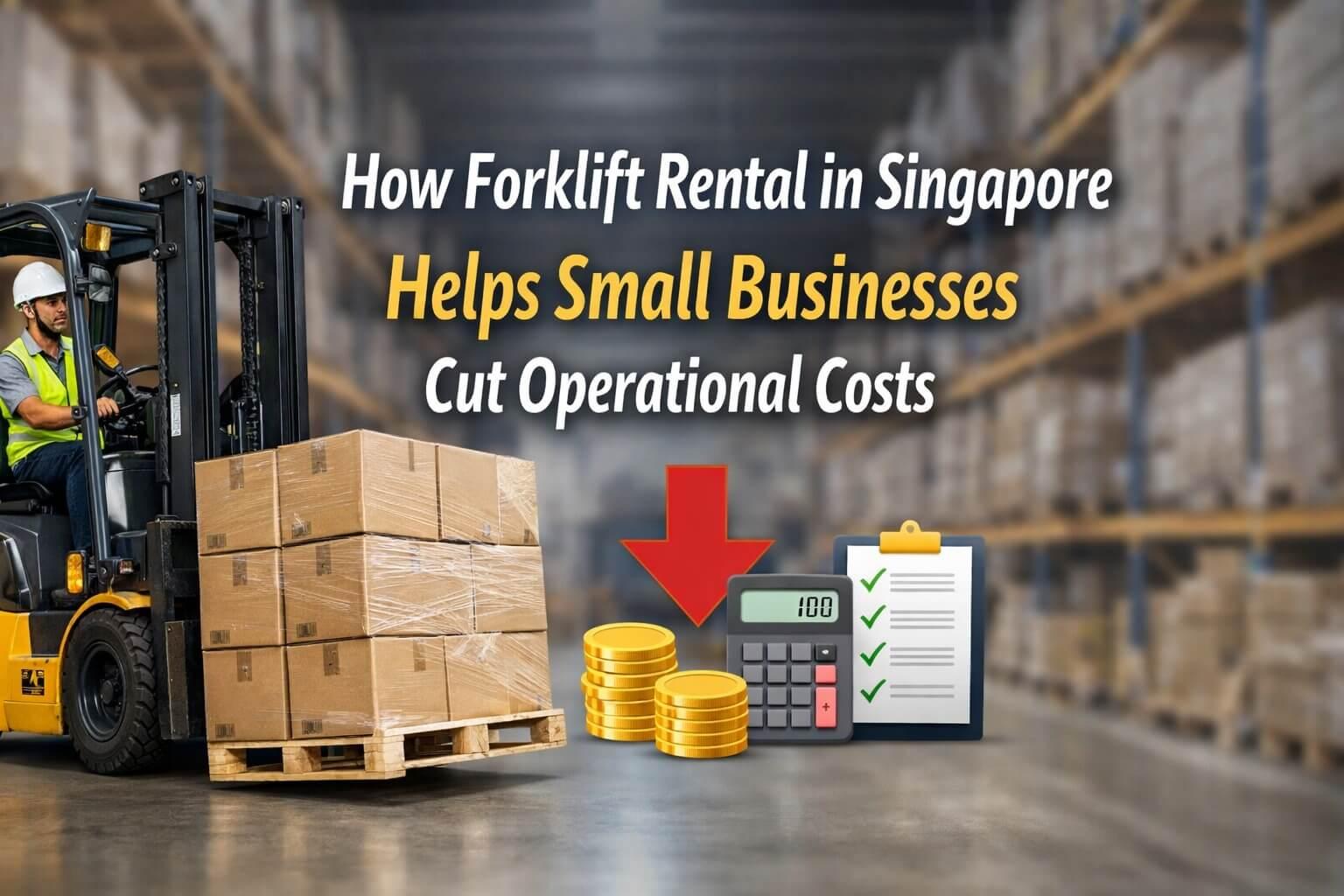
How Forklift Rental In Singapore Helps Small Businesses Cut Operational Costs
Running a small business in Singapore is expensive. From warehouse rent and labor to logistics and equipment, operational costs can quickly eat into profits. One of the biggest yet often overlooked expenses is material handling equipment. Many small businesses assume buying equipment is the only option, but forklift rental in Singapore offers a smarter, more flexible way to manage operations while keeping costs under control.
In this guide, we’ll explore how forklift rental helps small businesses reduce expenses, improve efficiency, and scale operations without heavy upfront investments.
Why Forklifts Are Essential for Small Businesses in Singapore
Forklifts are no longer limited to large warehouses or manufacturing units. Today, SMEs in logistics, e-commerce, retail storage, construction, and cold storage rely on forklifts for the following:
- Loading and unloading goods
- Stacking pallets in tight spaces
- Faster order fulfillment
- Safer material handling
- Reduced manual labor
But owning a forklift comes with hidden costs that many small businesses underestimate.
The Real Cost of Buying a Forklift (Beyond the Purchase Price)
Buying a forklift seems like a one-time investment, but the long-term expenses add up quickly:
- High upfront capital cost
- Maintenance and servicing
- Insurance and compliance
- Operator training
- Repairs and downtime
- Storage and parking space
- Depreciation of asset value
For small businesses with fluctuating demand, this becomes an unnecessary financial burden. Forklift rental in Singapore helps convert fixed costs into manageable operating expenses.
Forklift Rental in Singapore: A Cost-Saving Alternative for SMEs
Forklift rental allows businesses to pay only for what they use. Instead of blocking capital in equipment ownership, you can allocate funds to growth activities like marketing, inventory, and hiring.
✔ No Heavy Upfront Investment
Rental eliminates the need for large capital expenditure. This is ideal for startups and SMEs managing tight cash flow.
✔ Lower Maintenance Costs
Maintenance and servicing are usually included in rental plans, saving you thousands of dollars annually.
✔ No Depreciation Risk
Owned forklifts lose value over time. With rentals, depreciation is not your concern.
✔ Flexible Rental Duration
You can rent daily, weekly, monthly, or long-term based on project requirements.
✔ Access to the Latest Models
Rental companies regularly update fleets, so you get modern, energy-efficient forklifts without buying new machines.
How Forklift Rental Improves Operational Efficiency
Forklift rental in Singapore is not just about saving money it also improves productivity.
- Faster loading and unloading = quicker turnaround
- Reduced labor dependency = lower manpower costs
- Better warehouse utilization = more storage capacity
- Improved safety = fewer workplace accidents
All of these lead to higher efficiency and lower operational overhead.
Ideal Use Cases for Small Businesses
Forklift rental works best for businesses with:
- Seasonal demand
- Temporary projects
- Limited warehouse space
- Budget constraints
- Rapid growth plans
Industries benefiting the most include:
- Logistics & 3PL
- E-commerce fulfillment centers
- FMCG warehouses
- Construction sites
- Manufacturing SMEs
Forklift Rental vs. Forklift Purchase: Quick Comparison
Factor Forklift Rental Forklift Purchase Upfront Cost Low Very High Maintenance Included Extra Cost Flexibility High Low Asset Risk None High Scalability Easy Difficult Technology Upgrade Regular Costly How to Choose the Right Forklift Rental Partner in Singapore
Not all rental providers offer the same value. Before choosing, check:
- Fleet variety (electric, reach trucks, stackers)
- Maintenance support
- Emergency replacement
- Transparent pricing
- MOM compliance
- Operator training options
- Rental contract flexibility
A reliable partner ensures minimal downtime and maximum ROI. Trusted providers like Paves Asia Pacific help SMEs choose the right equipment based on warehouse layout, load type, and budget.
Cost Control Tips When Renting Forklifts
To maximize savings from forklift rental in Singapore:
Choose the right capacity (don’t over-rent heavy-duty models).
- Opt for electric forklifts for indoor use to save fuel costs.
- Rent only for peak seasons
- Combine rental with operator training
- Track usage hours to avoid overbilling
Strategic rental planning can reduce your equipment-related operational costs by up to 40%.
Scalability Without Financial Stress
As your business grows, renting gives you the freedom to:
Add more forklifts during peak demand
Upgrade equipment as operations expand
Return machines when the workload reduces
Test different forklift types without buying
This flexibility supports growth without locking capital into depreciating assets. Many SMEs scale faster by renting instead of buying.
Final Thoughts
Forklift rental in Singapore is a practical, cost-effective solution for small businesses looking to cut operational expenses while staying efficient and scalable. By avoiding heavy capital investments and ongoing maintenance costs, SMEs can focus on growth, customer service, and profitability.
Working with a reliable partner like Paves Asia Pacific ensures you get the right equipment, flexible terms, and professional support helping your business grow without financial strain.
FAQs: Forklift Rental in Singapore for Small Businesses
Q1. Is forklift rental cheaper than buying for small businesses?
Yes. Rental avoids upfront investment, maintenance, and depreciation costs, making it more affordable for SMEs.Q2. Can startups benefit from forklift rental in Singapore?
Absolutely. Rental helps startups manage cash flow while accessing professional-grade equipment.Q3. What is the minimum rental period?
Most providers offer daily, weekly, and monthly plans depending on your needs.Q4. Is maintenance included in the rental?
Yes, most forklift rental services include maintenance and breakdown support.Q5. How do I choose the right forklift type?
Assess load capacity, aisle width, warehouse height, and indoor vs. outdoor use.