
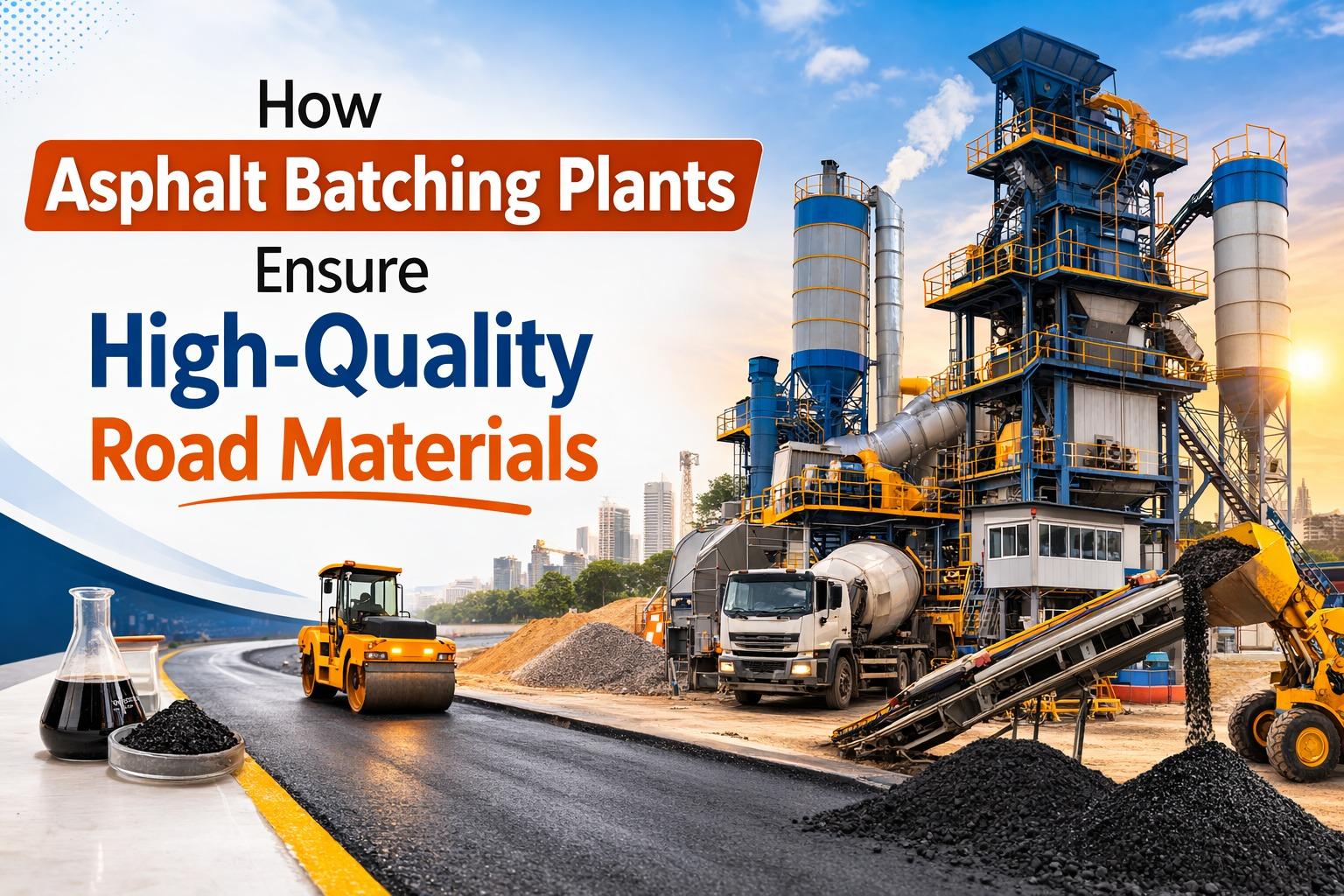
How Asphalt Batching Plants Ensure High-Quality Road Materials
Road construction requires precision, durability, and consistent material quality to ensure that highways, city roads, and industrial pavements last for many years. One of the most critical pieces of equipment used in modern road construction is the Asphalt Batching Plant. This advanced machinery is designed to produce high-quality asphalt mixtures that meet strict engineering standards and construction requirements.
An asphalt batching plant carefully measures and combines aggregates, bitumen, and filler materials in precise proportions. The controlled mixing process ensures uniform asphalt quality, which is essential for building smooth, durable, and weather-resistant roads.
With the increasing demand for reliable infrastructure and long-lasting road surfaces, contractors and construction companies rely heavily on modern asphalt plants to maintain consistency and efficiency during large-scale road projects. In this article, we explore how asphalt batching plants work, why they are important for producing high-quality road materials, and how they contribute to efficient and sustainable road construction.
Understanding Asphalt Batching Plants
An asphalt batching plant is a specialized machine used in road construction to produce asphalt mixtures in batches. The plant combines aggregates such as sand, gravel, and crushed stone with bitumen to create asphalt used in road paving.
Unlike continuous plants, batch plants produce asphalt in controlled batches. This allows engineers to maintain precise control over the mix composition, ensuring consistent quality and performance for every batch produced.
Main Components of an Asphalt Batching Plant
Modern plants include several key components:
Cold Aggregate Feed System – Stores and feeds different sizes of aggregates.
Drying Drum – Removes moisture from aggregates before mixing.
Hot Aggregate Elevator – Transfers heated aggregates to storage bins.
Screening Unit – Separates aggregates into different sizes.
Weighing System—Measures aggregates, bitumen, and filler accurately.
Mixer Unit – Combines materials to produce asphalt mixture.
Each component plays a vital role in ensuring that the final asphalt product meets quality standards required for road construction.
How Asphalt Batching Plants Work Ensure Material Quality
Producing high-quality asphalt requires precision and strict process control. Asphalt batching plants ensure quality through several mechanisms.
1. Accurate Material Proportioning
One of the most important factors in asphalt production is maintaining the correct ratio of aggregates, bitumen, and filler materials. Modern plants use automated weighing systems to measure each component precisely.
Accurate proportioning ensures the following:
Strong bonding between aggregates and bitumen
Uniform asphalt texture
Increased road durability
2. Consistent Temperature Control
Temperature plays a crucial role in asphalt quality. If aggregates are too cold, bitumen will not bind properly. If the mixture becomes too hot, it can degrade the binder. Asphalt batching plants include advanced heating systems that maintain the correct temperature throughout the production process.
This results in:
Better material binding
Improved asphalt workability
Longer pavement life
3. Efficient Mixing Process
The mixing process ensures that all materials combine evenly. Inside the mixer, rotating blades thoroughly mix aggregates, filler, and bitumen to create a uniform asphalt mixture.
Uniform mixing ensures:
Consistent asphalt composition
Improved road surface strength
Reduced material segregation
4. Quality Control and Monitoring
Modern asphalt plants use advanced control systems that allow operators to monitor the entire production process. Automated systems help maintain consistent batch quality and reduce human error.
Key monitoring features include the following:
Aggregate weighing control
Bitumen dosage accuracy
Temperature monitoring
Batch production tracking
This technology ensures that every asphalt batch meets required standards.
Advantages of Using Asphalt Batch Mix Plants
Asphalt batch mix plants offer several benefits that help contractors maintain quality and efficiency.
High Production Accuracy
Batch plants provide precise control over the mixing process, ensuring consistent asphalt composition.
Flexibility in Mix Designs
Different road projects require different asphalt compositions. Batch plants allow operators to easily change mix designs for highways, city roads, or airport runways.
Reduced Material Waste
Accurate batching minimizes material wastage and ensures optimal use of raw materials.
Better Quality Control
Since asphalt is produced in batches, operators can inspect and verify each batch before it is used for paving.
Importance of Asphalt Quality in Road Construction
High-quality asphalt is essential for building durable roads that can withstand heavy traffic and harsh weather conditions.
Poor asphalt quality can lead to the following:
Road cracks
Potholes
Surface deformation
Increased maintenance costs
Asphalt batching plants help eliminate these problems by producing consistent and high-performance asphalt mixtures.
Factors That Influence Asphalt Plant Selection
When selecting an asphalt plant, contractors consider several important factors.
Production Capacity
Different projects require different production capacities. Large highway projects may require plants with high output capacity.
Plant Automation
Automated plants improve production efficiency and reduce operational errors.
Energy Efficiency
Modern plants are designed to reduce fuel consumption and improve environmental sustainability.
Equipment Reliability
Choosing equipment from experienced manufacturers ensures long-term performance and minimal downtime. Many road construction companies choose reliable equipment providers such as Atlas Industries for advanced asphalt plant technology and consistent production performance.
Role of Modern Technology in Asphalt Plants
Technological advancements have significantly improved asphalt plant performance.
Automation Systems
Automated systems allow operators to control the entire plant from a central control room.
Advanced Mixing Technology
Improved mixer designs ensure faster and more uniform asphalt mixing.
Environmental Controls
Modern plants include dust collectors and emission control systems to reduce environmental impact. These innovations help contractors maintain high-quality production while meeting environmental regulations. Leading equipment manufacturers such as Atlas Industries continue to develop modern asphalt plants designed for efficiency, durability, and improved road construction quality.
Future of Asphalt Production Technology
The future of asphalt production focuses on sustainability and efficiency. New technologies are being developed to improve asphalt plant performance and reduce environmental impact.
Some key trends include:
Use of recycled asphalt materials
Energy-efficient heating systems
Smart plant automation
Real-time production monitoring
These innovations will help the road construction industry produce stronger and more sustainable road infrastructure.
Conclusion
Asphalt batching plants play a critical role in ensuring the production of high-quality road construction materials. By accurately measuring raw materials, maintaining proper temperature control, and ensuring consistent mixing, these plants produce durable asphalt mixtures that support long-lasting road infrastructure.
With the help of modern technology and automated systems, contractors can maintain strict quality standards while improving production efficiency. Selecting the right asphalt plant not only improves construction performance but also ensures that roads remain strong and reliable for years to come. As infrastructure development continues to grow worldwide, asphalt batching plants will remain an essential component of modern road construction.
FAQs
Q1: What is an asphalt batching plant used for?
An Asphalt Batching Plant is used to produce asphalt mixtures by combining aggregates, bitumen, and filler materials in controlled batches for road construction.
Q2: What is the difference between an asphalt batch mix plant and a continuous plant?
An asphalt batch mix plant produces asphalt in batches, allowing precise control over mix composition, while continuous plants produce asphalt without batching.
Q3: What factors affect asphalt batch mix plant price?
The asphalt batch mix plant price depends on plant capacity, automation level, technology, and production efficiency.