How To Build A Complete Fire Alarm Detector Testing Kit For Professional Technicians
Professional fire alarm technicians need the right equipment to inspect, test, and maintain fire detection systems across commercial buildings, industrial facilities, hospitals, hotels, warehouses, and other properties. A well-organised testing kit helps technicians carry out planned inspections, verify detector responses, and complete maintenance tasks according to approved procedures.
However, building a complete fire alarm detector testing kit involves more than purchasing a smoke detector tester. Technicians may need compatible smoke and heat testing equipment, dispensers, access poles, replacement accessories, safety documentation, and inspection tools.
For fire safety contractors and maintenance teams working in Saudi Arabia, selecting the right equipment also requires considering detector compatibility, building layouts, ceiling heights, product availability, and applicable maintenance requirements.
This guide explains the essential components of a professional fire alarm detector testing kit and how to select equipment that supports safe and consistent testing.
What Should a Complete Fire Alarm Detector Testing Kit Include?
A professional fire alarm detector testing kit should contain equipment suited to the installed detector technologies and the manufacturer's approved testing procedures.
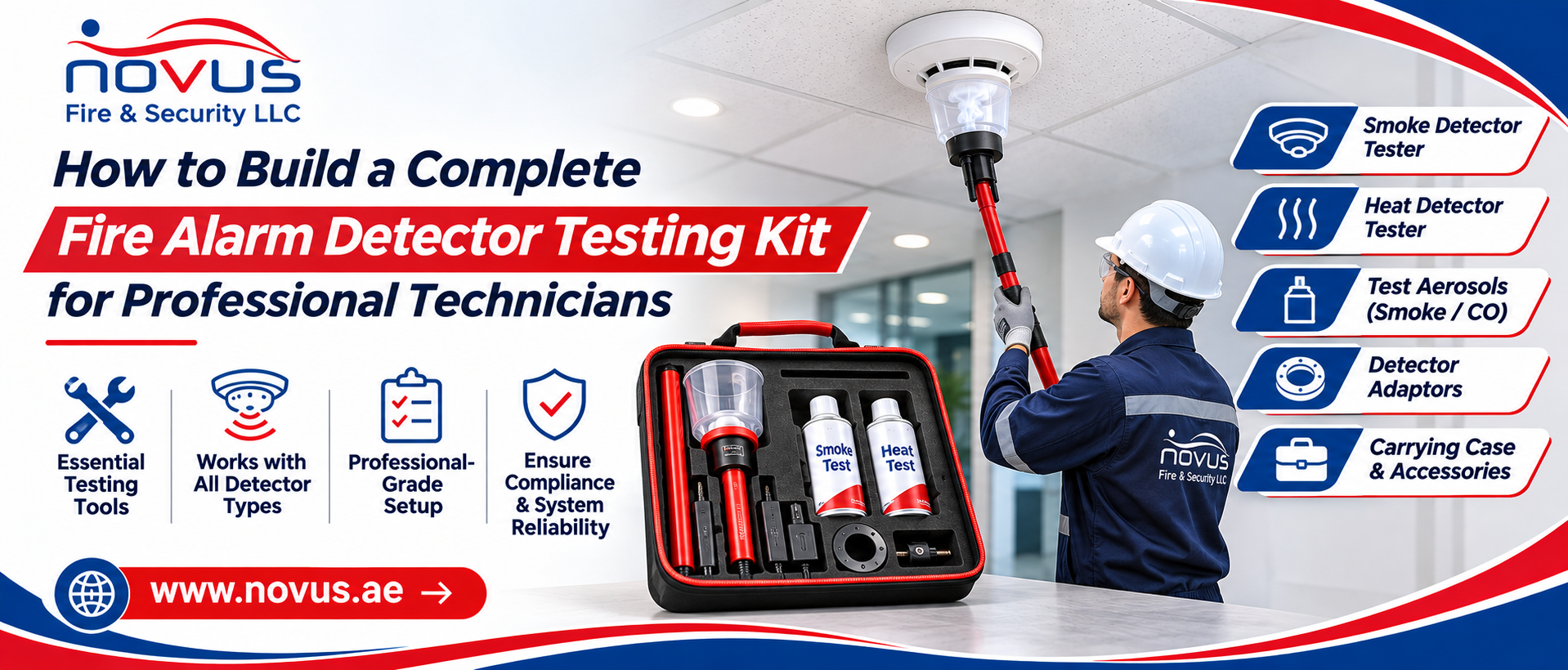
Essential components may include:
- Smoke detector tester: Provides an approved smoke stimulus for compatible smoke detectors.
- Heat detector tester: Provides a controlled heat stimulus for compatible heat detectors.
- Multi-sensor testing equipment: Supports testing of compatible detectors with multiple sensing technologies.
- Smoke dispensers and accessories: Help apply and contain smoke-test aerosol around compatible detectors.
- Access poles: Allow technicians to reach detectors installed at suitable heights.
- Replacement consumables: Include compatible aerosols and other manufacturer-approved consumables.
- Inspection tools: Support visual checks, documentation, and maintenance activities.
- Safety documentation: Includes operating instructions and relevant product safety information.
The exact kit depends on the detector models, building requirements, and testing procedures used at each facility.
1. Start by Identifying the Installed Fire Alarm Detector Types
Before purchasing fire alarm testing equipment, technicians should identify the detector types installed at the facility. Different detectors use different sensing technologies, so one testing method cannot be assumed suitable for every device.
Common detector types include:
Photoelectric smoke detectors: These detect smoke particles through changes in light within a sensing chamber. They are commonly found in offices, hotels, commercial buildings, and other occupied facilities.
Ionisation smoke detectors: These use an ionization chamber to detect changes associated with combustion particles. Their use and testing requirements depend on the specific detector and applicable regulations.
Heat detectors: These respond to temperature changes or a predefined temperature threshold. They require a suitable heat testing method rather than a smoke aerosol.
Multi-sensor detectors: These combine two or more sensing technologies, such as smoke and heat detection. Their testing procedures depend on the detector's design and manufacturer instructions.
Aspirating smoke detection systems: These draw air through sampling pipes for analysis. They have specific testing and maintenance requirements that differ from conventional point detectors.
Create a detector inventory that records the manufacturer, model, location, sensing technology, and approved testing method. This information provides a practical starting point for selecting the correct equipment.
2. Include a Professional Smoke Detector Tester
A smoke detector tester is one of the most important components of a professional fire alarm maintenance kit. It provides an approved smoke stimulus to compatible detectors so technicians can check their functional response.
Smoke testing equipment commonly includes a compatible test aerosol and a dispenser designed to apply the stimulus around the detector.
When selecting a smoke detector tester Saudi Arabia technicians can use, consider:
- Compatibility with the installed detector models.
- Approved smoke-test aerosol.
- Compatible dispenser and test cup.
- Required extension poles.
- Product operating instructions.
- Availability of replacement consumables.
- Safety data and storage requirements.
For example, professional solo smoke testing arrangements may use dedicated dispensers and compatible synthetic smoke aerosols. The correct combination must be confirmed before use.
The purpose of the equipment is to support functional testing, not to replace other required inspection or sensitivity-testing procedures.
3. Add Suitable Heat Detector Testing Equipment
Smoke detector testing alone is not sufficient for facilities that also contain heat detectors. These devices require an appropriate heat stimulus to verify their functional response.
A professional kit should therefore include suitable heat detector testing equipment wherever heat detectors are part of the installed system.
Before choosing a heat tester, check:
Detector compatibility: Confirm whether the equipment supports the installed fixed-temperature, rate-of-rise, or other heat detector types.
Temperature control: Review the tester's operating temperature and control features against the detector manufacturer's requirements.
Application method: Understand how the tester is positioned and applied to the detector.
Power requirements: Check whether the equipment uses rechargeable batteries, replaceable batteries, or another power arrangement.
Safety features: Review temperature limits, handling instructions, and precautions for working at height.
Accessories: Confirm whether extension poles, adapters, or detector-specific accessories are required.
A smoke aerosol should never be used as a substitute for the approved heat testing method. Each detector must be tested according to its technology and manufacturer instructions.
4. Consider Solo Smoke Detector Testing Equipment
Solo is a recognized name in professional smoke detector testing equipment. Its product range includes smoke-test aerosols, dispensers, access poles, and related accessories designed to support functional testing of compatible smoke detectors.
When comparing Solo smoke detector tester options in Saudi Arabia, consider the complete testing arrangement rather than purchasing individual components without checking compatibility.
A typical setup may include:
- A compatible smoke-test aerosol.
- A Solo smoke dispenser.
- An appropriate access pole.
- Required adapters or accessories.
- Product instructions and safety documentation.
For example, the Solo 330 and Solo 332 dispensers are designed for different detector sizes and should be selected according to product specifications. Compatible aerosol selection is equally important.
Technicians should also check current regional product availability. Some models or consumables may have changing availability, so confirm the latest manufacturer documentation and supplier information before placing an order.
5. Include Smoke Detector Testing Accessories and Access Equipment
Accessories are an essential part of a complete testing kit. Even a suitable detector tester may not be practical if the required accessories are missing or incompatible.
Important smoke detector testing accessories may include:
Extension poles: Help technicians access detectors installed on high ceilings while using suitable approved access arrangements.
Dispenser cups: Help position and contain the test stimulus around compatible detectors.
Adapters: Support the connection of compatible equipment components where specified by the manufacturer.
Replacement consumables: Include approved aerosols and other items required for continued operation.
Storage cases: Help organise and protect equipment during transportation and storage.
Battery and charging accessories: Keep battery-operated testing devices ready for scheduled inspections.
Before buying accessories, check the exact equipment model and manufacturer's compatibility information. Avoid assuming that accessories from different testing systems can be interchanged.
6. Select Professional Smoke Detector Testing Equipment for Different Buildings
The testing requirements of a small office can be very different from those of a large warehouse or industrial facility. A professional kit should reflect the working environment and the number of detectors being maintained.
Consider these building-specific requirements:
Commercial offices: Technicians may need compact testing equipment and suitable access poles for detectors installed across multiple floors.
Hotels and shopping centres: Large detector inventories and occupied areas may require carefully coordinated testing schedules and organised equipment.
Warehouses: High ceilings and storage arrangements may require appropriate extension poles and safe access planning.
Factories: Dust, environmental conditions, and different detector technologies may influence equipment selection and maintenance procedures.
Hospitals: Testing must be coordinated carefully with facility management to minimise disruption and follow site-specific safety arrangements.
A flexible kit should cover the actual detector types and access requirements without including unnecessary equipment.
7. Prepare Safety Documentation and Technician Training
Testing equipment is only effective when technicians understand how to use it correctly. Every professional kit should be supported by operating instructions, safety information, and appropriate training.
Before testing begins, technicians should:
- Review the fire alarm system documentation.
- Identify the detector model and approved testing method.
- Confirm that the selected equipment and consumables are compatible.
- Follow site notification and alarm-management procedures.
- Inspect testing equipment for damage or defects.
- Apply the approved test stimulus according to instructions.
- Verify the expected detector and control panel response.
- Record results and report any faults.
- Restore the system to its normal operating condition.
For aerosol products, review the safety data sheet for storage, handling, and disposal requirements. For heat testers, follow the manufacturer's temperature and handling precautions.
A successful functional test does not automatically confirm every aspect of detector sensitivity, system communication, or connected fire protection equipment. Additional testing may be required under the approved maintenance program.
8. Organise Equipment for Routine Fire Alarm Maintenance
A complete testing kit should be organised so technicians can identify, inspect, and maintain every component efficiently.
Use a simple equipment checklist containing:
| Equipment category | What to check |
|---|---|
| Smoke tester | Compatibility, condition, and operating instructions |
| Smoke aerosol | Approved type, condition, and availability |
| Heat detector tester | Detector compatibility and operating condition |
| Dispensers | Correct size, fit, and condition |
| Extension poles | Length, locking mechanism, and compatibility |
| Accessories | Adapters, cups, and replacement components |
| Power supplies | Battery condition and charging requirements |
| Documentation | Manuals, safety data sheets, and inspection records |
Before each inspection, check that the required equipment is available and serviceable. After testing, clean, store, and maintain components according to manufacturer instructions.
For professional fire alarm maintenance equipment Saudi Arabia requirements, technicians should also consider local product availability, delivery timelines, technical support, and access to replacement consumables.
9. Choose a Reliable Supplier for Fire Alarm Testing Equipment
A suitable supplier should offer accurate product information and help technicians identify equipment that matches their maintenance requirements.
When evaluating fire alarm testing equipment Saudi Arabian suppliers, consider:
- Availability of genuine products.
- Product specifications and compatibility information.
- Access to manufacturer documentation.
- Availability of accessories and consumables.
- Technical assistance and product guidance.
- Delivery and after-sales support.
For information about professional smoke detector testers, heat detector testing equipment, and related fire safety products, Novus Fire and Security LLC can help technicians explore suitable equipment options.
Conclusion
Building a complete fire alarm detector testing kit requires careful selection of smoke testers, heat testers, dispensers, access poles, accessories, consumables, and safety documentation.
The right combination depends on the installed detector technologies, building layout, testing procedures, and maintenance requirements. Technicians should confirm compatibility before purchasing equipment and ensure that every component is used according to manufacturer instructions.
A well-organised testing kit, supported by trained personnel and documented inspection procedures, can help maintenance teams carry out functional testing more consistently. Novus Fire and Security LLC is an option for professionals exploring fire alarm testing equipment and maintenance solutions for commercial and industrial facilities.
FAQs
Q1. What should a complete fire alarm detector testing kit include?
A complete kit may include a smoke detector tester, heat detector tester, compatible dispensers, test aerosols, access poles, accessories, and safety documentation.
Q2. How do I choose a professional smoke detector tester in Saudi Arabia?
Check detector compatibility, manufacturer-approved testing methods, dispenser requirements, accessories, consumables, product availability, and supplier support.
Q3. Is Solo smoke detector testing equipment suitable for professional technicians?
Solo testing equipment is designed for professional smoke detector testing applications. Technicians should confirm compatibility between the dispenser, aerosol, and installed detector models.
Q4. Why are smoke detector testing accessories important?
Accessories such as extension poles, dispenser cups, adapters, and replacement consumables help technicians operate compatible testing equipment correctly and access installed detectors.
Q5. Does a smoke detector testing kit also test heat detectors?
Not necessarily. Smoke and heat detectors require different testing stimuli. A professional kit should include a compatible heat detector tester when heat detector testing is required.