
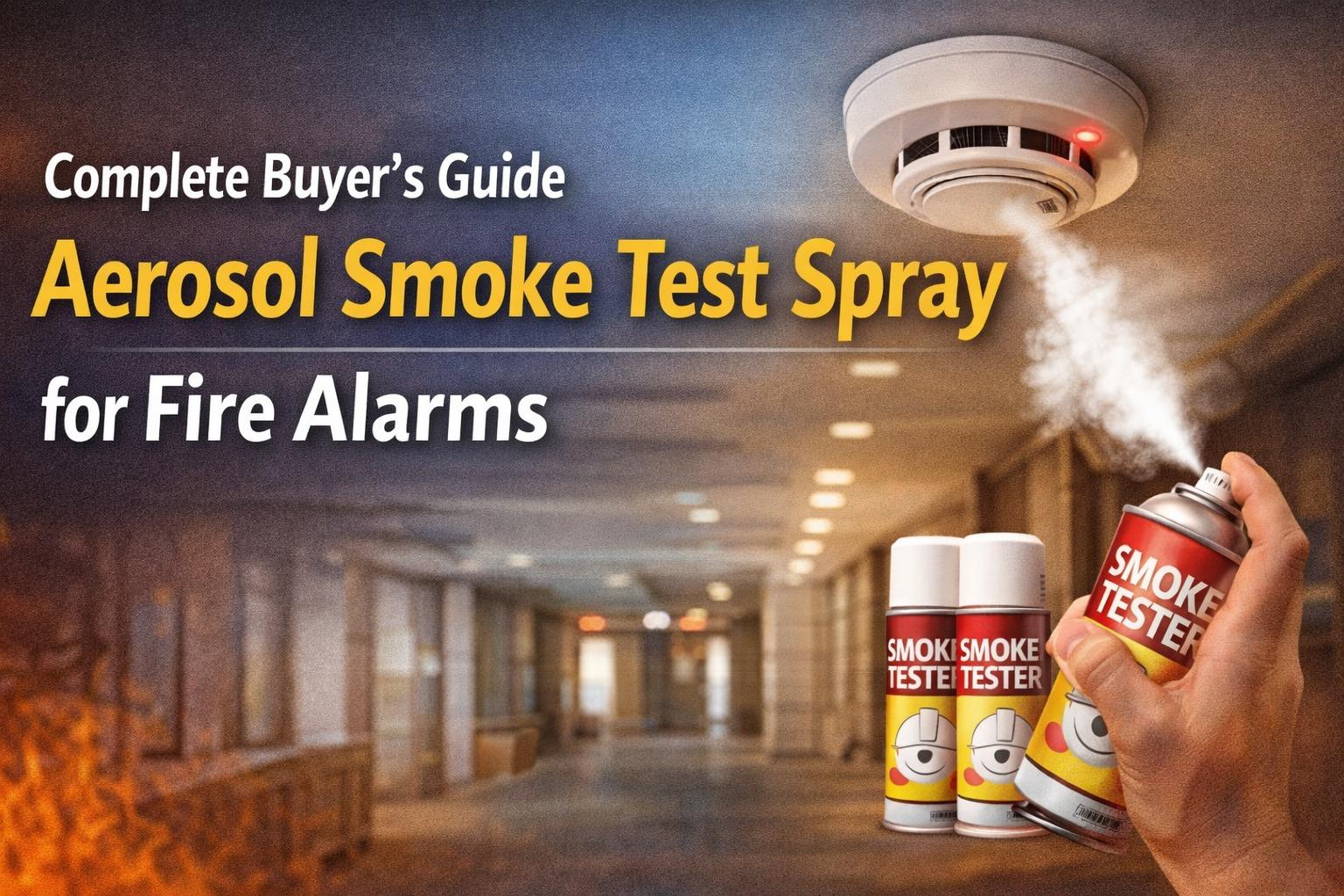
Complete Buyer’s Guide To Smoke Detector Test Spray For Fire Alarms
Fire safety depends heavily on early detection, and smoke detectors are the first line of defense in commercial, industrial, and residential buildings. However, having detectors installed is not enough regular testing is essential to ensure they respond correctly during emergencies. This is where Smoke Detector Test Spray plays a critical role. These aerosol sprays simulate smoke particles to safely trigger detectors and verify their sensitivity without producing real smoke or harmful residue.
In Saudi Arabia and across the GCC, compliance audits and safety inspections increasingly require documented testing procedures. Facility managers, safety officers, and maintenance teams rely on aerosol test sprays as part of their routine fire safety checks. This buyer’s guide explains how these sprays work, what to look for when purchasing, how to use them correctly, and how to integrate them into your fire safety maintenance plan.
Why Aerosol Spray for Smoke Detector Testing Is Essential for Compliance
Manual testing methods like blowing air or using lighters are unsafe and unreliable. Professional aerosol spray for smoke detector testing is designed to:
- Simulate real smoke particles accurately
- Trigger detectors without damaging sensors
- Leave no residue inside the device
- Meet safety compliance and audit standards
- Reduce false alarms during testing
Regulatory bodies and insurers often expect certified testing methods to be used during routine inspections. Using professional-grade sprays ensures accurate results while protecting detector sensitivity over time.
Types of Smoke Detector Test Sprays
1. Standard Sensitivity Test Sprays
Designed for routine checks of smoke detectors in offices, malls, and residential properties.
2. Fast-Response Test Sprays
Trigger detectors quickly—ideal for large commercial facilities where time efficiency matters.
3. Environmentally Friendly Sprays
Non-toxic and residue-free, suitable for hospitals, schools, and food facilities.
4. Multi-Sensor Compatible Sprays
Work with optical, photoelectric, and ionization detectors.
How Smoke Detector Tester Aerosols Work
Professional sprays release fine aerosol particles that mimic smoke. These particles enter the detector’s sensing chamber and activate the alarm. High-quality smoke detector tester aerosol products are formulated to avoid clogging sensors or leaving chemical deposits. This ensures accurate results without compromising long-term detector performance.
Who Should Use Smoke Detector Test Sprays?
- Facility managers
- Fire safety officers
- Maintenance contractors
- Compliance auditors
- Property management companies
Professional service providers like Novus Fire and Security LLC often use certified aerosol sprays as part of their routine inspection protocols to ensure consistent, compliant results.
How to Choose the Right Smoke Detector Test Spray (Buyer Checklist)
When buying test sprays, consider:
✔ Compatibility with your detector type
✔ Compliance with international safety standards
✔ Non-toxic, residue-free formulation
✔ Fast activation time
✔ Shelf life and storage requirements
✔ Brand reputation and certifications
✔ Ease of use with extension nozzles
Avoid cheap, unbranded sprays that may damage sensors or provide inaccurate results.
Step-by-Step Guide: How to Spray Test Smoke Detectors Safely
1. Notify occupants before testing
2. Ensure ventilation is adequate
3. Shake the can well
4. Spray short bursts near the detector
5. Confirm alarm activation
6. Reset the detector and panel
7. Record the test result
Using the correct spray test smoke detector method prevents false alarms and system faults.
Testing Frequency & Compliance Best Practices
- Offices & commercial buildings: Quarterly
- Hotels & hospitals: Monthly
- Warehouses & industrial sites: Monthly to quarterly
- Residential complexes: At least twice a year
Regular testing improves audit readiness and reduces emergency response risks.
Common Mistakes to Avoid
- Using real smoke or open flames
- Spraying too close for too long
- Not resetting alarms after testing
- Skipping documentation
- Using expired spray cans
Storage & Safety Tips
- Store cans in cool, dry areas
- Avoid direct sunlight
- Check expiry dates
- Keep away from heat sources
- Train staff on correct usage
- Integrating Test Sprays into Your Fire Safety Program
Professional fire safety providers like Novus Fire and Security LLC integrate aerosol testing into scheduled inspection programs. This approach ensures consistent compliance, accurate documentation, and minimal operational disruption.
Future Trends in Smoke Detector Testing
- Smart detector self-testing
- IoT-connected testing logs
- Remote compliance reporting
- Eco-friendly aerosol formulations
Final Buyer’s Checklist
- Choose certified, non-toxic sprays
- Match spray to detector type
- Follow proper testing steps
- Maintain records
- Replace expired products