
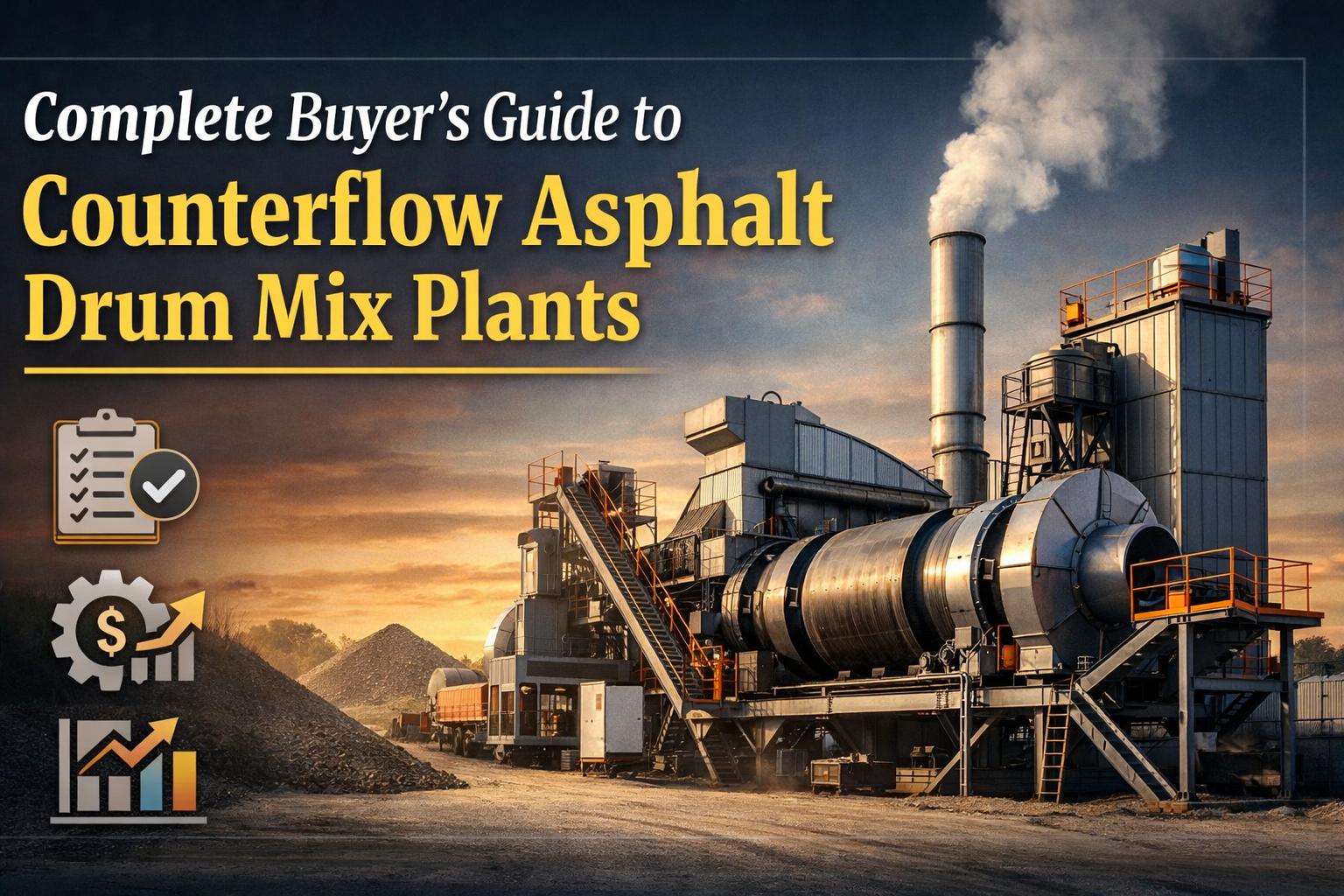
Complete Buyer’s Guide To Counterflow Asphalt Drum Mix Plants
The road construction industry continues to evolve with the demand for higher efficiency, reduced emissions, and better quality asphalt. One of the most reliable solutions available today is the Counter-flow asphalt mixer, a technology designed to deliver consistent output while optimizing fuel consumption and environmental performance. If you are planning to invest in a counterflow asphalt mixing plant, understanding its working principle, features, pricing factors, and selection criteria is essential. This guide walks you through everything you need to know before making a purchase decision.
What is a Counterflow Asphalt Drum Mix Plant?
A Counterflow asphalt drum plant is a type of asphalt mixing equipment where aggregates and hot gases move in opposite directions within the drum. This design ensures better heat transfer and minimizes hydrocarbon emissions. Unlike parallel flow systems, Counterflow asphalt drum mixers separate the drying and mixing processes, resulting in improved asphalt quality and fuel efficiency.
How Does a Counterflow System Work?
In a Counterflow asphalt plant drum, the process works in three main stages:
- Aggregate Drying Zone
Raw aggregates enter the drum and are heated as they move forward. - Combustion Zone
Hot gases move in the opposite direction, maximizing heat exchange. - Mixing Zone
Bitumen is added after aggregates are properly heated, ensuring uniform coating.
This reverse-flow mechanism is what makes the counterflow asphalt mixing plant superior in performance and environmental compliance.
Key Advantages of Counterflow Asphalt Drum Mix Plants
1. Superior Asphalt Quality
The separation of drying and mixing ensures that bitumen is not exposed to direct flame, preserving its properties.
2. Fuel Efficiency
The counterflow design improves heat utilization, reducing fuel consumption significantly.
3. Reduced Emissions
These plants produce fewer emissions compared to traditional systems, making them eco-friendly.
4. Consistent Output
Whether you choose a stationary or Counterflow mobile drum mix plant, you can expect uniform and reliable production.
5. Flexibility
Suitable for various road construction projects, from highways to rural roads.
Types of Counterflow Asphalt Drum Mix Plants
Stationary Plants
- Best for large-scale, long-term projects
- High production capacity
- Requires permanent installation
Mobile Plants
- Easy to transport
- Ideal for remote or short-term projects
- Includes Counterflow mobile drum mix plant options
Important Components to Consider
When evaluating a Counterflow asphalt drum plant, pay attention to these components:
- Drying Drum – Efficient heat transfer system
- Burner Unit – Controls fuel consumption
- Mixing Chamber – Ensures uniform coating
- Pollution Control System – Reduces dust and emissions
- Control Panel – Automation and monitoring
Each component directly impacts performance, durability, and maint
Production Capacity Options
Counterflow plants are available in various capacities, typically ranging from
- 40 TPH (tons per hour)
- 60–90 TPH
- 120 TPH and above
Your choice depends on project size, frequency, and budget.
Counterflow Drum Mix Plant Price Factors
The Counterflow drum mix plant price varies based on multiple factors:
1. Production Capacity
Higher capacity plants cost more but offer better ROI for large projects.
2. Mobility
A Counterflow mobile drum mix plant may have a higher initial cost due to added portability features.
3. Automation Level
Fully automatic plants are more expensive but reduce labor costs.
4. Pollution Control Systems
Advanced dust collectors and filters add to the overall cost.
5. Brand & Build Quality
Reputed manufacturers ensure durability and long-term performance.
How to Choose the Right Counterflow Asphalt Mixing Plant
1. Assess Your Project Requirements
Understand your daily production needs and project duration.
2. Consider Mobility Needs
If you frequently change project locations, a mobile plant is ideal.
3. Evaluate Fuel Efficiency
Choose a plant with optimized burner technology.
4. Check Environmental Compliance
Ensure the plant meets local pollution control regulations.
5. After-Sales Support
Reliable service and the availability of spare parts are crucial.
Click Here: Download Case Study
Maintenance Tips for Long-Term Performance
- Regularly inspect the drum and burner
- Clean dust collection systems
- Monitor temperature control systems
- Lubricate moving parts
- Schedule periodic servicing
Proper maintenance increases lifespan and ensures consistent output.
Common Applications
A counterflow asphalt mixing plant is widely used in:
- Highway construction
- Urban road development
- Airport runways
- Rural infrastructure projects
- Road repair and resurfacing
Why Choose Atlas Industries?
When investing in a Counterflow asphalt drum plant, selecting a trusted manufacturer is critical. Atlas Industries is known for delivering high-performance plants with advanced technology, robust construction, and excellent after-sales support. Their solutions are designed to meet modern road construction demands while ensuring efficiency and durability.
Frequently Asked Questions (FAQs)
Q1. What is the main benefit of a counterflow asphalt mixer?
A1. It improves heat efficiency and reduces emissions compared to traditional systems.
Q2. What is the average Counterflow drum mix plant price?
A2. Prices vary depending on capacity, automation, and features, but generally range from mid to high investment levels.
Q3. Is a Counterflow mobile drum mix plant suitable for small projects?
A3. Yes, it is ideal for projects requiring mobility and flexibility.
Q4. How does a Counterflow asphalt plant drum improve quality?
A4. By separating drying and mixing, it prevents overheating of bitumen.
Q5. What capacity should I choose?
A5. It depends on your project scale smaller projects may need 40–60 TPH, while large projects require 100+ TPH plants.