
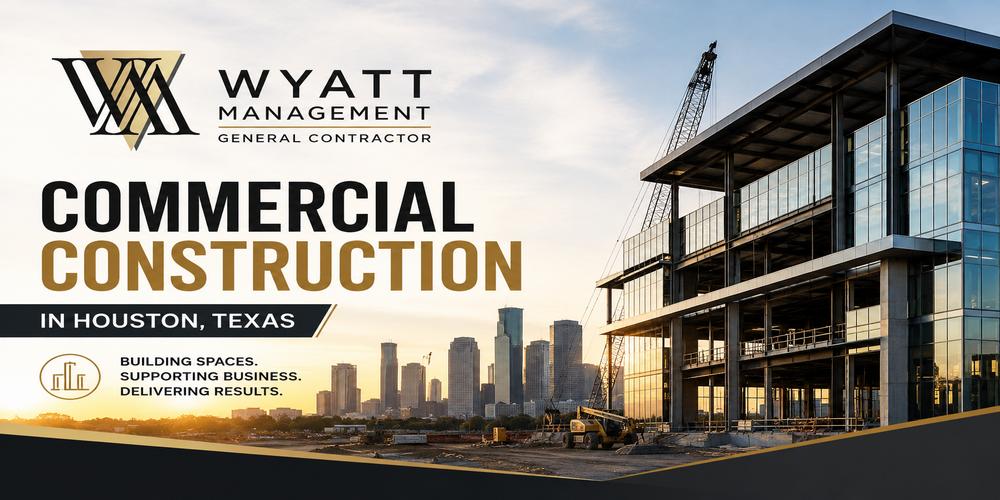
Commercial Construction In Houston: Costs, Process & What Business Owners Need To Know | Wyatt Management
Houston continues to be one of the most active commercial construction markets in Texas. Industrial development, retail expansion, healthcare facilities, restaurants, and other commercial projects are contributing to continued construction activity across the region. Current market reports show strong development pipelines and sustained demand for commercial space in Houston.
For business owners, however, starting a construction project involves much more than hiring a contractor and breaking ground. The right planning process can make the difference between a project that stays on schedule and one that experiences costly delays, changes, and unexpected expenses.
What Is Commercial Construction?
Commercial construction refers to the development, renovation, or improvement of buildings and spaces used for business purposes. This can include restaurants, retail stores, medical offices, automotive facilities, office buildings, industrial properties, and other commercial environments.
Commercial construction projects can generally fall into several categories:
- Ground-up construction
- Tenant improvements and tenant finish
- Commercial remodeling
- Retrofit and conversion projects
- Tilt-wall construction
- Commercial build-outs
Each project has different requirements, timelines, budgets, permitting considerations, and construction challenges.
How Much Does Commercial Construction Cost in Houston?
One of the first questions business owners ask is, "How much will my commercial construction project cost?"
There is no single price per square foot that applies to every Houston commercial construction project. Costs can vary significantly depending on the building type, size, location, existing conditions, structural requirements, finishes, mechanical systems, and scope of work.
Tenant improvements, for example, can have very different costs from ground-up construction because the project may involve an existing building shell rather than a completely new structure. Restaurant and specialized commercial projects can also require extensive mechanical, electrical, plumbing, and specialty equipment work.
The most reliable way to establish a construction budget is to develop the project scope early and involve an experienced commercial general contractor during the planning process.
The Commercial Construction Process
A successful commercial construction project starts well before construction crews arrive at the jobsite.
1. Project Planning
The first step is understanding the business objectives, building requirements, budget, schedule, and intended use of the space.
A contractor should work with the owner and project team to identify the project's priorities and potential challenges before construction begins.
2. Pre-Construction
Pre-construction is where many important decisions are made. Budget development, scheduling, constructability reviews, estimating, coordination, and planning can help identify problems before they become expensive field issues.
Early contractor involvement can also help owners make more informed decisions about materials, construction methods, and project priorities.
3. Design and Coordination
The construction team must coordinate architectural, structural, mechanical, electrical, and plumbing requirements.
Good coordination is particularly important for commercial projects where multiple trades and systems must work together within the same building.
4. Permitting and Approvals
Commercial projects may require permits, inspections, and approvals before and during construction. The specific requirements depend on the project type and location.
Planning these requirements early can help reduce unnecessary delays during construction.
5. Construction
Once planning, documentation, and approvals are in place, construction can move into the field.
Depending on the project, this may include site work, foundations, structural construction, exterior work, MEP installation, interior construction, finishes, equipment installation, and final inspections.
6. Completion and Turnover
The final stage involves completing punch-list items, inspections, testing, documentation, and turnover so the owner can begin using the completed space.
For businesses, completing construction efficiently is especially important because opening delays can affect operations and revenue.
Ground-Up Construction vs. Tenant Improvements
Business owners should understand the difference between ground-up construction and tenant improvement projects before selecting a construction approach.
Ground-up construction involves developing a new commercial building from the site level. It can provide greater control over the building's layout, structure, systems, and long-term functionality.
Tenant improvement construction involves transforming an existing commercial space to meet the needs of a new tenant. This can include walls, ceilings, flooring, lighting, HVAC modifications, plumbing, electrical work, finishes, and other improvements.
The right approach depends on the property, business requirements, budget, and long-term goals.
Why Choosing the Right Houston General Contractor Matters
A commercial general contractor plays a central role in coordinating the many moving parts of a construction project.
The contractor may be responsible for managing subcontractors, schedules, materials, budgets, quality control, site coordination, inspections, and communication with the project team.
For business owners, an experienced contractor can provide valuable insight before and during construction—not simply manage the jobsite.
How Wyatt Management Approaches Commercial Construction
Wyatt Management General Contractor takes a process-driven approach to commercial construction.
Through The Wyatt Way, the company focuses on planning, communication, coordination, and efficient project execution. Its approach incorporates Lean Building practices and the Last Planner System™ to help project teams improve workflow, identify constraints, and maintain better coordination throughout construction.
Wyatt Management provides commercial construction services including:
- Ground-up construction
- Tenant finish and tenant improvements
- Commercial remodeling
- Retrofit and conversion projects
- Tilt-wall construction
- Commercial construction management
The company works with businesses that need functional, efficient commercial spaces while maintaining focus on schedule, quality, and project execution.
Commercial Construction in Houston Requires Local Experience
Houston presents its own construction considerations, including site conditions, permitting requirements, weather, development patterns, labor availability, and the specific requirements of different commercial sectors.
Houston's current market is also becoming increasingly diversified, with industrial, manufacturing, retail, mixed-use, life sciences, and other specialized development contributing to construction activity.
For this reason, selecting a contractor with experience managing commercial projects in the Houston market can provide valuable advantages during planning and execution.
Final Thoughts
Commercial construction is a significant investment, and successful projects begin with clear planning. Understanding the construction process, developing a realistic budget, identifying project risks, and selecting the right commercial general contractor can help businesses move from concept to completed space more efficiently.
Whether you are planning a ground-up commercial building, restaurant construction, retail build-out, medical office, tenant improvement, remodel, retrofit, or other commercial project in Houston, Wyatt Management can help guide the project from planning through completion.
Planning a commercial construction project in Houston? Wyatt Management can help you build with a more organized, efficient, and predictable process.