
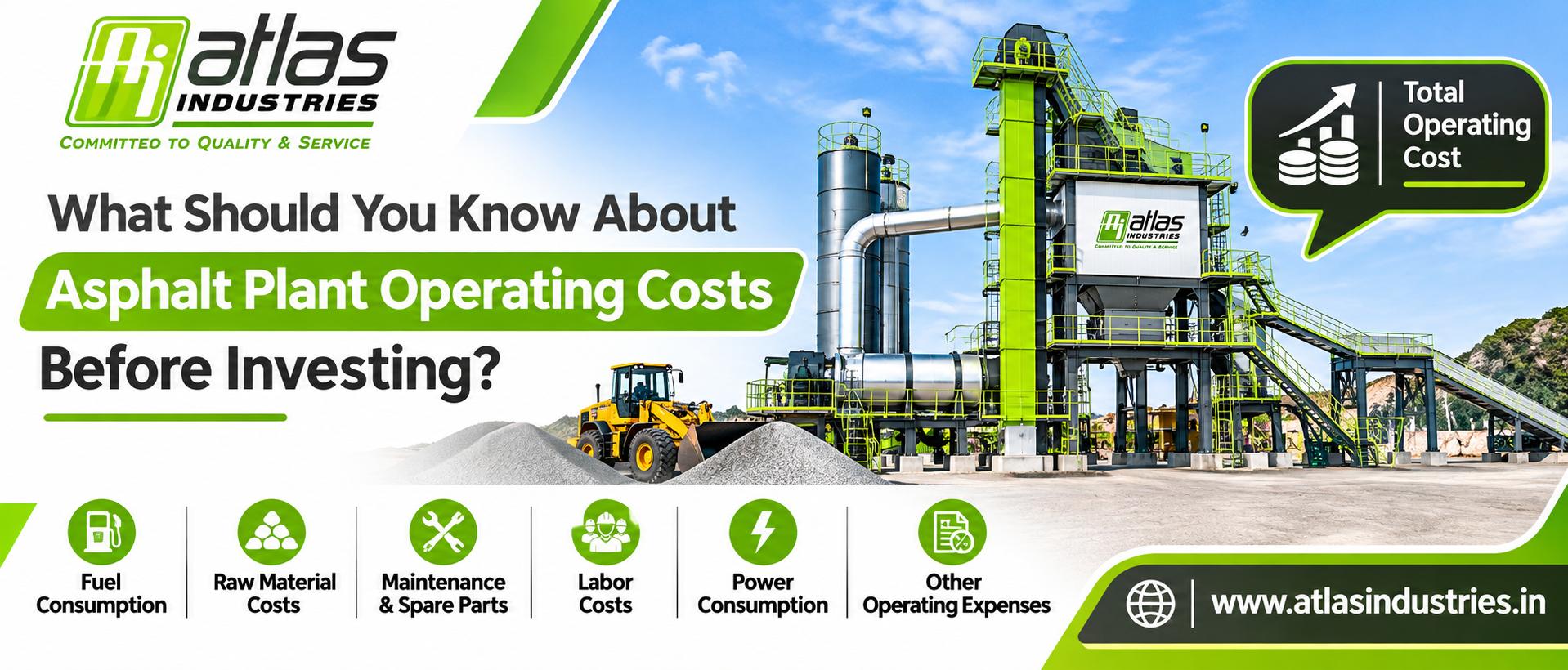
What Should You Know About Asphalt Plant Operating Costs Before Investing?
Investing in an asphalt plant is a significant decision for road construction companies, infrastructure contractors, and businesses involved in pavement production. While the purchase price is an important consideration, the actual cost of operating an asphalt plant extends far beyond the initial investment.
Fuel consumption, raw materials, electricity, labour, maintenance, transportation, and production efficiency all influence the long-term cost of manufacturing asphalt. Businesses that overlook these expenses may struggle to manage operating budgets or achieve their expected return on investment.
An Asphalt Batching Plant can provide controlled production of hot mix asphalt for road construction projects, but its financial performance depends on selecting suitable equipment and managing daily operations efficiently.
Before choosing an asphalt plant, businesses should understand the major operating expenses, evaluate production requirements, and compare equipment specifications. A detailed cost assessment can help determine whether the investment is financially pr.actical for current and future projects.
What Are the Main Operating Costs of an Asphalt Plant?
Asphalt plant operating costs are the recurring expenses involved in producing asphalt, maintaining equipment, and managing daily plant operations.
The main cost components include:
- Raw materials: Aggregates, bitumen, filler, and other approved mix components.
- Fuel consumption: Energy required for drying aggregates and heating production materials.
- Electricity: Power used by motors, conveyors, mixers, pumps, and control systems.
- Labour: Operators, technicians, maintenance staff, and plant supervisors.
- Maintenance: Replacement parts, inspections, repairs, and preventive servicing.
- Transportation: Moving raw materials to the plant and delivering finished asphalt.
- Production efficiency: Material wastage, downtime, and actual output compared with rated capacity.
The most economical plant is not necessarily the one with the lowest purchase price. Businesses should compare total ownership and operating costs against expected production volume and project requirements.
1. Understand the Initial Investment and Total Cost of Ownership
Before purchasing an asphalt plant, businesses should distinguish between the initial investment and the total cost of ownership.
The initial investment may include the plant itself, transportation, installation, foundation work, electrical connections, commissioning, and other site preparation expenses.
However, the financial commitment continues after installation.
Total ownership costs may include:
- Equipment purchase price.
- Site preparation and civil works.
- Installation and commissioning.
- Fuel and electricity.
- Labour and operator training.
- Routine maintenance.
- Spare parts and repairs.
- Insurance and compliance-related expenses.
A plant with a lower purchase price may have higher operating costs if it consumes more fuel, requires frequent maintenance, or experiences regular production interruptions.
Businesses should therefore compare the estimated costs over the expected operating life rather than making decisions based only on the initial quotation.
2. Calculate Fuel Consumption and Energy Expenses
Fuel is one of the major operating expenses of an asphalt plant.
During production, aggregates must be dried and heated before they are mixed with bitumen and other components. The drying process requires energy, and fuel consumption can significantly influence the cost of each tonne of asphalt produced.
Actual consumption depends on several factors:
- Aggregate moisture content.
- Required production temperature.
- Burner efficiency.
- Plant production rate.
- Ambient conditions.
- Insulation and heat losses.
- Operating practices.
For example, aggregates with higher moisture content generally require more energy for drying. Poorly managed burner settings or unnecessary idle operation can also increase fuel expenses.
When comparing equipment, businesses should request manufacturer information about fuel consumption under clearly defined operating conditions.
It is important to compare figures using consistent assumptions, including aggregate moisture, fuel type, production temperature, and output rate.
3. Evaluate Raw Material Costs
Raw materials represent a significant portion of asphalt production expenses.
The main materials generally include aggregates, bitumen, and mineral filler. Their costs depend on quality specifications, availability, transportation distance, supplier agreements, and market conditions.
Businesses should consider:
Aggregates: Evaluate the cost, grading, quality, and availability of different aggregate sizes.
Bitumen: Compare supplier prices, delivery arrangements, storage requirements, and applicable specifications.
Mineral filler: Consider material availability, storage, and handling requirements.
Material wastage: Monitor incorrect batching, spillage, rejected mixes, and unnecessary stock losses.
Consistent material quality is essential because poor-quality inputs can affect the final asphalt mix and potentially result in additional production expenses.
Businesses should establish reliable supply arrangements and monitor material consumption for every production batch.
4. Compare Different Asphalt Plant Types
The type of asphalt plant can influence production flexibility, operating processes, and maintenance requirements.
An asphalt batch mix plant produces asphalt in controlled batches. It allows operators to adjust mix proportions between batches, making it suitable for projects requiring different asphalt mix designs.
An asphalt mixing plant is a broader term that includes equipment used to combine aggregates, bitumen, and other materials into asphalt mixtures.
A hot mix asphalt plant is designed to produce asphalt at elevated temperatures for applications requiring hot mix material.
When comparing plant configurations, consider:
- Required production volume.
- Number of mix designs.
- Material handling requirements.
- Site conditions.
- Fuel and energy consumption.
- Installation requirements.
- Maintenance accessibility.
A batch plant may suit operations that require flexibility between different mix specifications, while other plant configurations may be more appropriate for different production requirements.
The right choice depends on project demands rather than equipment type alone.
5. Assess Asphalt Plant Production Capacity
Production capacity directly affects how efficiently a plant can meet project requirements.
Businesses should evaluate their expected asphalt demand before selecting equipment. Choosing a plant with insufficient capacity may create production delays, while purchasing an oversized plant can increase investment and operating expenses.
When assessing asphalt plant production capacity, consider:
- Expected tonnes of asphalt required per day.
- Average production hours.
- Peak project demand.
- Required mix types.
- Plant availability and downtime.
- Material supply capacity.
- Transportation and delivery schedules.
It is also important to distinguish between rated capacity and actual output. A plant's advertised capacity may be based on specific operating conditions, including aggregate moisture, mix temperature, and material characteristics.
Ask the manufacturer for realistic production information under conditions similar to your intended operation.
6. Consider Automation and Its Impact on Operating Costs
Automation can help improve production consistency and reduce certain manual operating activities.
Modern asphalt plant automation systems may include automatic batching controls, temperature monitoring, aggregate weighing, bitumen metering, production data recording, and operator interfaces.
These systems can support:
- More consistent material proportions.
- Improved process monitoring.
- Reduced manual intervention.
- Better production records.
- Faster identification of certain operating problems.
- Improved control over production settings.
However, automation also involves additional investment and may require technical support, software updates, and operator training.
Businesses should assess which automated features provide practical value rather than paying for unnecessary complexity.
An appropriately designed asphalt plant automation system can help improve process control and support more efficient production management.
7. Include Maintenance and Spare Parts Expenses
Regular maintenance is essential for reliable asphalt plant operations.
Equipment operating under demanding production conditions experiences wear across several components, including conveyors, bearings, motors, burners, mixers, filters, and material handling systems.
Unexpected breakdowns can interrupt production, delay road construction schedules, and increase repair costs.
Before purchasing, understand the maintenance requirements of the plant.
Important considerations include:
- Preventive maintenance schedules.
- Availability of replacement parts.
- Service support and response times.
- Ease of accessing major components.
- Inspection and lubrication requirements.
- Technical documentation.
- Operator and maintenance training.
A maintenance budget should include routine servicing as well as provision for unexpected repairs.
Businesses should also ask about the expected service life of major components and the availability of genuine replacement parts.
8. Evaluate Labour, Transportation, and Site Costs
Operating an asphalt plant requires more than machinery and raw materials.
Labour expenses may include plant operators, maintenance technicians, quality control personnel, supervisors, and other support staff.
Transportation costs also affect overall production economics. Aggregates and bitumen must reach the plant, while finished asphalt needs to be delivered to construction sites within suitable time and temperature conditions.
Site-related expenses may include:
- Land preparation.
- Internal access roads.
- Storage areas.
- Material handling arrangements.
- Electrical infrastructure.
- Water management.
- Environmental control systems.
Businesses should consider the plant's location in relation to material suppliers and project sites. A strategically located facility may reduce transportation time and logistical expenses.
At Atlas Industries, businesses can evaluate asphalt production equipment options according to their project requirements, expected output, and operating considerations.
9. How to Choose the Right Asphalt Plant Manufacturer and Supplier
Selecting the right equipment partner is important for controlling long-term operating costs.
A reliable asphalt batching plant manufacturer should provide clear technical specifications, realistic production information, installation guidance, and after-sales support.
Before making a purchase, evaluate the following:
Technical specifications: Check rated capacity, burner configuration, fuel requirements, automation features, and material handling systems.
Production suitability: Confirm that the plant can support your expected production volume and mix requirements.
Energy performance: Request fuel consumption information based on defined operating conditions.
Maintenance support: Understand servicing schedules, spare parts availability, and technical assistance.
Installation and commissioning: Confirm what support is included during plant setup and initial operation.
Supplier experience: Review relevant equipment experience, project references, and customer support arrangements.
A suitable asphalt plant supplier should help you understand both the equipment's capabilities and the ongoing responsibilities associated with operating it.
Conclusion
Understanding asphalt plant operating costs before investing is essential for making a financially sound equipment decision. Fuel, raw materials, electricity, labour, maintenance, transportation, and production efficiency all influence the cost of manufacturing asphalt.
Businesses should compare total ownership costs, evaluate realistic production capacity, and consider automation and maintenance requirements before selecting equipment.
The right asphalt plant is not simply the one with the lowest purchase price. It is the one that meets production requirements, supports consistent mix quality, and offers manageable operating expenses over its working life. Careful planning and choosing an experienced equipment partner can help businesses make a more informed long-term investment.