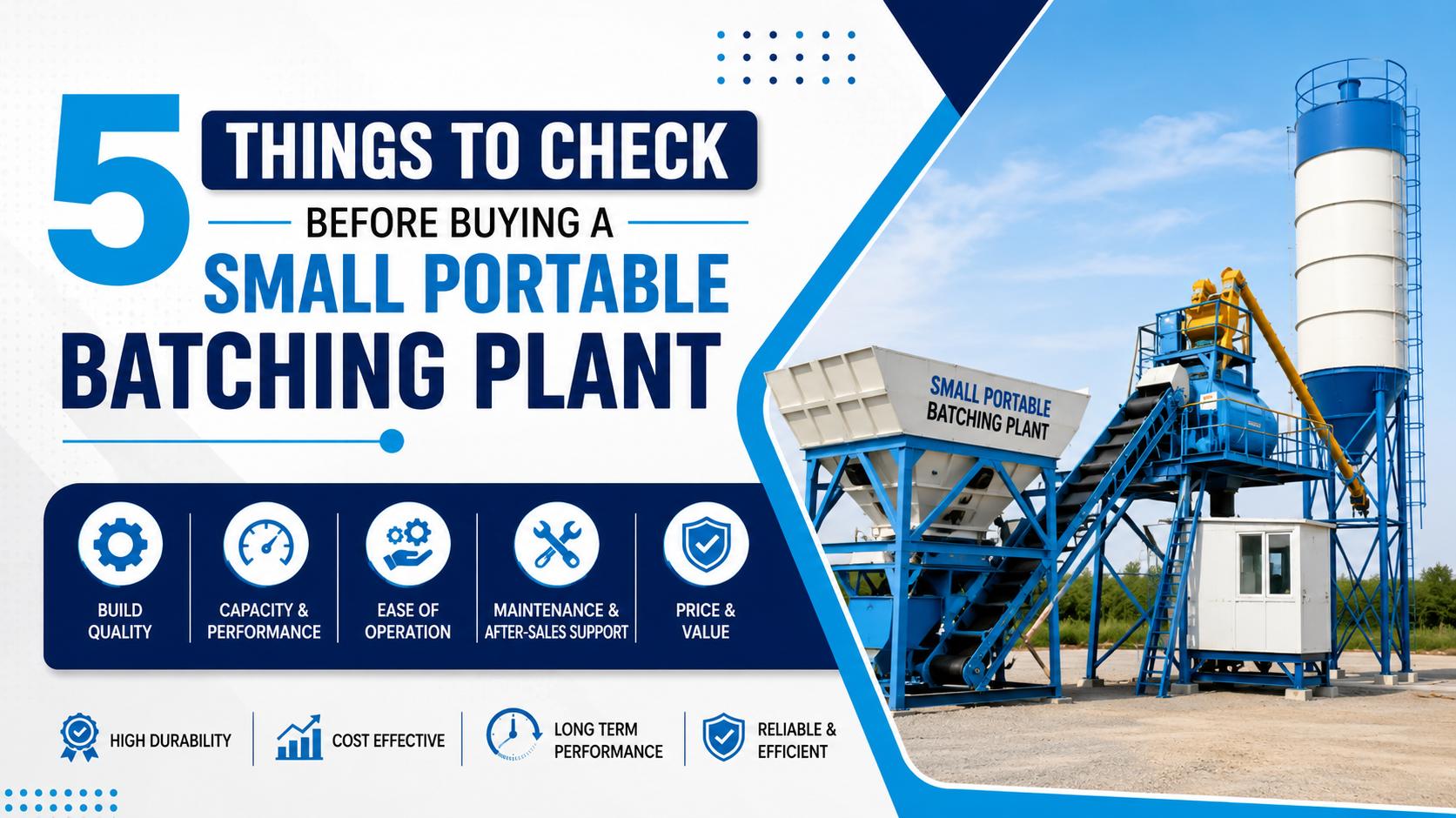
5 Things To Check Before Buying A Small Portable Batching Plant
Choosing the right Small Portable Batching Plant is one of the most important decisions for contractors, builders, and infrastructure companies. Whether you're handling residential projects, road construction, or commercial developments, selecting the right equipment can improve productivity, reduce costs, and ensure consistent concrete quality.
If you're planning to buy portable batching plant equipment, you should look beyond price alone. Production capacity, mobility, automation, maintenance, and after-sales support all play a major role in long-term performance. A reliable portable batching plant manufacturer can help you maximize efficiency while minimizing downtime. This guide explains the five essential factors to evaluate before purchasing a small portable concrete batch plant or a mini portable concrete batch plant so you can make an informed investment.
What Should You Check Before Buying a Small Portable Batching Plant?
If you're comparing different batching plants, focus on these five factors:
- Production capacity that matches your project requirements.
- Mobility and ease of transportation.
- Automation and control system features.
- Build quality, maintenance, and spare parts availability.
- Manufacturer reputation, warranty, and after-sales service.
Checking these points helps you choose equipment that delivers consistent concrete quality, lower operating costs, and long-term reliability.
Why a Small Portable Batching Plant Is a Smart Investment
A Small Portable Batching Plant offers flexibility that traditional stationary plants cannot. Contractors working at multiple job sites can transport the plant quickly, reducing setup time and transportation expenses.
Modern portable plants are designed for
- Residential construction
- Commercial building projects
- Rural infrastructure
- Road construction
- Bridge construction
- Government projects
- Remote construction locations
A quality small portable concrete batch plant combines mobility with consistent concrete production, making it ideal for businesses looking to improve efficiency.
1. Check the Production Capacity
Production capacity should always match your project requirements.
Buying a larger plant than necessary increases operational costs, while a smaller unit may delay construction due to insufficient output.
Before purchasing, consider:
- Daily concrete demand
- Peak production requirements
- Future business expansion
- Number of projects handled simultaneously
A properly sized mini-portable concrete batch plant helps maintain productivity without unnecessary fuel or operating expenses.
Also evaluate:
- Mixer capacity
- Batch cycle time
- Aggregate storage
- Cement storage options
- Water dosing accuracy
These factors directly affect production efficiency and concrete consistency.
2. Evaluate Mobility and Installation Time
The biggest advantage of a portable batching plant is its mobility.
A plant that is difficult to transport or install can increase project delays and logistics costs.
Look for features such as:
- Compact design
- Trailer-mounted structure
- Quick installation
- Easy dismantling
- Reduced foundation requirements
- Fast relocation between project sites
Businesses working across multiple locations benefit significantly from equipment that can be moved with minimal effort. A well-designed portable plant minimizes idle time and helps contractors start production faster.
3. Review the Automation and Control System
Today's batching plants are equipped with advanced control systems that improve accuracy and reduce manual errors.
When comparing models, examine:
- PLC-based automation
- Digital weighing system
- Recipe management
- Automatic batching
- Production reporting
- Error diagnostics
- Remote monitoring options
Automation improves:
- Concrete consistency
- Material utilization
- Productivity
- Quality control
- Operator efficiency
An advanced control panel also makes training operators easier while reducing the chances of incorrect batching.
4. Inspect Build Quality and Maintenance Requirements
A batching plant is a long-term investment, making durability one of the most important buying considerations.
Inspect the following components carefully:
- Mixer construction quality
- Steel frame strength
- Corrosion protection
- Conveyor system
- Aggregate bins
- Cement screw conveyor
- Electrical components
A durable small portable concrete batch plant should withstand continuous operation under demanding site conditions.
Maintenance is equally important.
Choose equipment that offers:
- Easy access for servicing
- Readily available spare parts
- Simplified cleaning
- Low maintenance costs
- Reliable replacement components
Routine maintenance becomes much easier when the plant is designed for quick inspection and servicing.
5. Choose the Right Portable Batching Plant Manufacturer
The manufacturer plays a major role in the overall success of your investment.
Instead of selecting equipment based solely on price, evaluate the company's experience and customer support.
Look for:
- Industry experience
- Successful installations
- Customer reviews
- Product certifications
- Warranty coverage
- Technical assistance
- Operator training
- Spare parts availability
A trusted portable batching plant manufacturer provides ongoing support that helps reduce downtime and increase productivity throughout the equipment's life cycle.
Many contractors prefer Atlas Equipment because of its focus on reliable engineering, efficient plant design, and dependable customer support. Before making your final decision, compare technical specifications, warranty terms, and service capabilities. Atlas Equipments also emphasizes long-term service support, helping customers maintain consistent plant performance over the years.
Additional Buying Tips
Beyond the five major considerations, buyers should also compare:
- Fuel efficiency
- Power consumption
- Safety features
- Dust control system
- Environmental compliance
- Scalability
- Ease of operation
- Total ownership cost
These factors contribute to better operational performance and lower lifetime expenses.
Common Mistakes Buyers Should Avoid
Many first-time buyers make avoidable purchasing mistakes, including:
- Choosing equipment only because of a lower price
- Ignoring after-sales support
- Overlooking maintenance costs
- Selecting the wrong production capacity
- Not verifying spare parts availability
- Ignoring automation features
Avoiding these mistakes can improve equipment reliability and reduce long-term operating costs.
Conclusion
Buying a Small Portable Batching Plant requires careful planning and technical evaluation. Production capacity, portability, automation, build quality, and manufacturer support all influence the plant's overall performance and return on investment. Whether you plan to buy portable batching plant equipment for residential construction, infrastructure development, or commercial projects, evaluating these factors before purchase will help you make a smarter investment. A high-quality small portable concrete batch plant delivers consistent concrete production, easier transportation, reduced operational costs, and dependable performance across multiple project locations.
Frequently Asked Questions
Q1. What is a Small Portable Batching Plant?
A1. A Small Portable Batching Plant is a mobile concrete batching system designed for easy transportation and quick installation at different construction sites while producing consistent, high-quality concrete.
Q2. Why should I buy a portable batching plant?
A2. When you buy portable batching plant equipment, you benefit from faster project setup, lower transportation costs, improved flexibility, and efficient concrete production across multiple job sites.
Q3. How do I choose the right portable batching plant manufacturer?
A3. Select a portable batching plant manufacturer with proven industry experience, reliable after-sales support, quality certifications, spare parts availability, and positive customer feedback.
Q4. What projects are suitable for a small portable concrete batch plant?
A4. A small portable concrete batch plant is ideal for residential buildings, commercial construction, road projects, bridges, rural infrastructure, and remote construction sites.
Q5. What is the difference between a mini portable concrete batch plant and a larger batching plant?
A5. A mini portable concrete batch plant is designed for smaller production requirements, easier transportation, lower operating costs, and faster installation, making it suitable for small to medium-sized construction projects.